
A treasure preserved in salt
As a child, I spent hours observing my grandmother in the darkness of her kitchen. I saw her slipping whole lemons, fleshy and fragrant, into large terracotta jars. She covered them with gray salt, pressed them with a force surprising for her knotted hands, then forgot them for months in a cool corner. When she finally opened a jar, a smell of concentrated sunshine and fermented acidity flooded the room. It wasn't just a condiment. It was a promise of taste without artifice.
The candied lemon then became a precision tool. It was added at the end of cooking to liven up a fish tagine or a bitter vegetable salad, but never, ever, to add sweetness. For me, preserved lemon is a living taste memory — a way to remind myself every day that acidity can be the backbone of a satisfying meal, far more effectively than any sugar.
The salt crunches under your fingers. The lemon skin has become supple, almost translucent.
Today I use this heritage in my own marinades, in warm salads where the fat of the mackerel meets the liveliness of the bark. Its presence creates a feeling of immediate fullness. For what ? Because acid stimulates salivation, prepares the stomach and signals complexity to the brain that saturates taste receptors. In a keto lifestyle, where we avoid glucose peaks, this function is vital: it quenches the desire for sweets by providing a lively, salty and deep counterpoint which occupies the entire sensory space.
Metabolically, the acidity of candied lemon promotes gastric motility. It helps with smoother digestion of lipids and proteins, these pillars of my current diet. I have found that when I start a meal with a little acidity, my body seems to better 'understand' the fats it is receiving. I end up eating less, not out of restriction, but because satiety comes faster, more clearly. Preserved lemon is no longer just an ingredient; it is an educator for my modern palate often solicited by flavors that are too smooth.
A sip of cool water after a bite of lemon. The taste changes, becoming almost floral.
Techniques, respect and silence
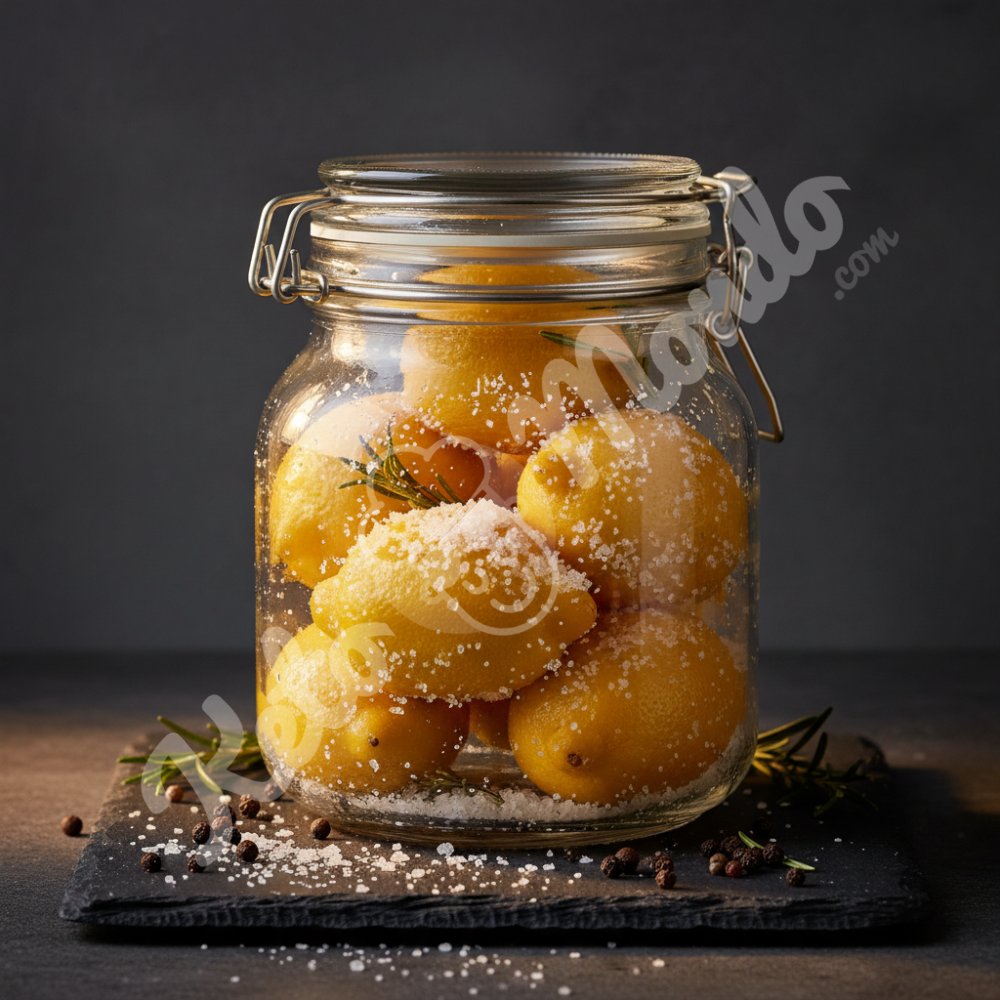
My method respects the silence necessary for transformation. I wash the lemons, make a light cross cut to help the salt penetrate the heart of the fruit, then stack them in a glass jar, adding coarse sea salt and a little fresh juice. I leave it to mature for at least three weeks, away from direct light. It's an exercise in patience. In a world that wants everything, immediately, waiting for a lemon to become candied is a form of culinary meditation.
To use them, I quickly rinse the surface to remove excess salt, I remove the pulp which has already given up all its juice, and I keep only the skin. This is where the soul of the fruit resides. I cut it into thin julienne, almost invisible, and I sprinkle it on my dishes. This julienne releases an acidity which does not attack, but which envelops. It transforms a simple plate of vegetables roasted in olive oil into a major sensory event.
I always favor local lemons, those that grew under the same sun as me. Respecting the product means accepting its radical salinity. This means admitting that acidity is an ally of metabolic health, capable of stabilizing blood sugar levels by slowing gastric emptying. At the table, this small gesture of sprinkling candied lemon advantageously replaces industrial sauces often loaded with hidden sugars.
The jar is empty. It's time to prepare a new one. The cycle continues.
Finally, candied lemon is a perfect example of silent cultural transmission. Each family has its secret, its duration, its type of salt. For me, integrating this tradition into the low-carb lifestyle means celebrating my grandmother's memory while building a sustainable kitchen. This proves that the solutions to our modern imbalances are often found in the forgotten jars of our ancestors. A cuisine that nourishes the body without inflaming it, which satisfies the mind without clouding it.
I look at the jar on my shelf. It shines like a little captive sun. It bides its time to come and balance my next meal, to remind me that satiety is a question of relief, not volume.
To eat is to remember. And to remember is to choose what makes us feel good, lastingly.