
A choreography of generosity
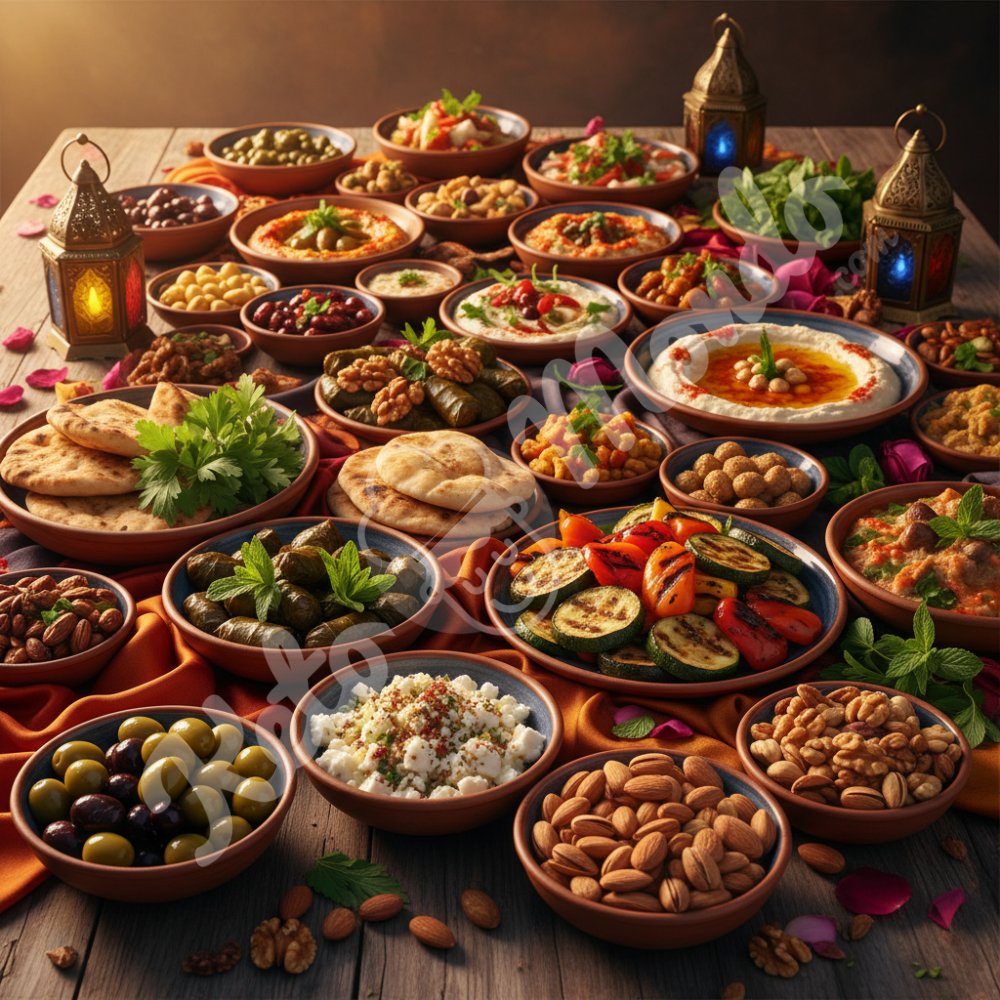
Mezze is not a simple meal, it is an institution, a way of being in the world. It is a table that never ends, where dishes follow one another in a choreography of colors and aromas. But contrary to popular belief, this generosity does not depend on bread. When I think back to the mezze of my childhood in Cairo or Beirut, what strikes me is that bread was only a vehicle, and often a vehicle that could be done without. The soul of mezze lies in grilled vegetables, creamy creams, salty cheeses and fresh herbs.
Sharing, the very essence of this practice, existed long before starchy foods. We share a story, a laugh, a presence. Bread is a habit, not a necessity. By removing starch from the mezze table, we do not remove conviviality; on the contrary, we purify it. Guests are allowed to focus on the richness of real flavors, the quality of the oils and the freshness of the land's produce. It's a return to a more honest and more vibrant form of sharing.
The abundance of life
Today, when I organize a mezze for my friends or family, I simply augment what was already there, hidden behind the mountain of bread. I multiply the platters of raw and crunchy vegetables: Lebanese cucumbers, vibrant cherry tomatoes, peppers of all colors. I serve flame-grilled eggplants, the smoked flesh of which is sufficient in itself. I suggest labneh — this drained yogurt so dense and creamy — sprinkled with zaatar and drowned in golden olive oil.
Cheese also plays a central role: authentic feta, grilled halloumi that 'squeaks' in the mouth, or mature shanklish. These foods provide the fats and proteins necessary for lasting satiety. We no longer use bread to 'push' food; you use your fingers, romaine lettuce leaves or simply a fork. The plate becomes a garden where you draw as you wish, without ever feeling weighed down by an unnecessary glycemic load.
Satiety without the crash
A mezze without bread is, paradoxically, much more satisfying than a traditional mezze. For what ? Because we eat real, nutrient-dense food instead of filling our stomachs with gluten and air. The feeling of fullness that one feels is stable and deep. It is not accompanied by this abdominal swelling or this drowsiness which often follows the massive ingestion of pita bread.
You really taste each ingredient. We perceive the bitterness of the olive, the acidity of the lemon, the spiciness of the garlic and the natural sweetness of the red onion. The palate is not anesthetized by starch. This sensory clarity reinforces the pleasure of the meal. We leave the table with a sharp mind and a light body, ready to continue the conversation for hours. This is the magic of low-carb mezze: it nourishes social bonds without ever compromising individual vitality.
The architecture of freshness
In this new configuration, vegetables are no longer side dishes, they are the base. They are the ones who create the structure of the meal. A very firm cucumber becomes the support for an eggplant cream. A chicory leaf welcomes a piece of grilled fish. This architecture of freshness is infinitely more varied and interesting than that of bread. It changes with the seasons, offering ever-changing textures and flavors.
By making vegetables the center of our attention, we honor the work of the earth and the cycle of nature. We are learning again to appreciate the simplicity of a raw, well-chosen and well-prepared product. It is a form of respect for ourselves and for what we consume. Mezze then becomes a celebration of biodiversity and metabolic health, unified by the pleasure of sharing.
Sharing unchanged, health regained
What is magnificent is that despite these changes, the essence of mezze remains intact. The hands that go to the common dishes, the laughter that bursts out, the table that stretches over time... all this remains. Nothing was lost, but everything was gained in terms of well-being and energy. We simply removed what was superfluous to let what was essential shine.
I encourage you to try this approach at your next dinner with friends. Dare to remove the bread and increase the number of herbs, vegetables and good fats. Observe how the dynamics of the table change, how conversations become livelier, and how everyone feels better at the end. Mezze is a life lesson: happiness does not lie in the accumulation of empty calories, but in the richness of exchanges and the quality of what we share.