
Depth of taste
In the West, we traditionally talk about the four fundamental flavors: sweet, salty, sour and bitter. But Korean cuisine has always recognized a fifth, absolutely essential: umami. This savory, deep and persistent taste, present in dashi, old kimchi, aged soy paste — it is what creates true taste satisfaction without ever needing to resort to sugar. Umami engages the palate in a radically different way: it creates a feeling of fullness, completeness, and depth that lingers long after the last bite. It is the taste of real satisfaction.
A drop of aged soy sauce on the tongue. An explosion of dark, rich flavors.
When I started shifting my cooking toward a low-carb approach, I immediately realized that umami was my most powerful secret weapon. An umami-rich broth, a complex fermented dough, an accompaniment that seems almost sweet in its depth but is actually purely protein — these elements are more than enough to create a satisfying plate without any grains or added sugar. Umami speaks directly to the brain, signaling that the meal is complete, dense and nourishing. It soothes hunger centers much more effectively than any fast carbohydrate.
I remember my first seaweed and dried mushroom broth. It was so rich that I forgot the rice.
Spices, heat and sensory stimulation
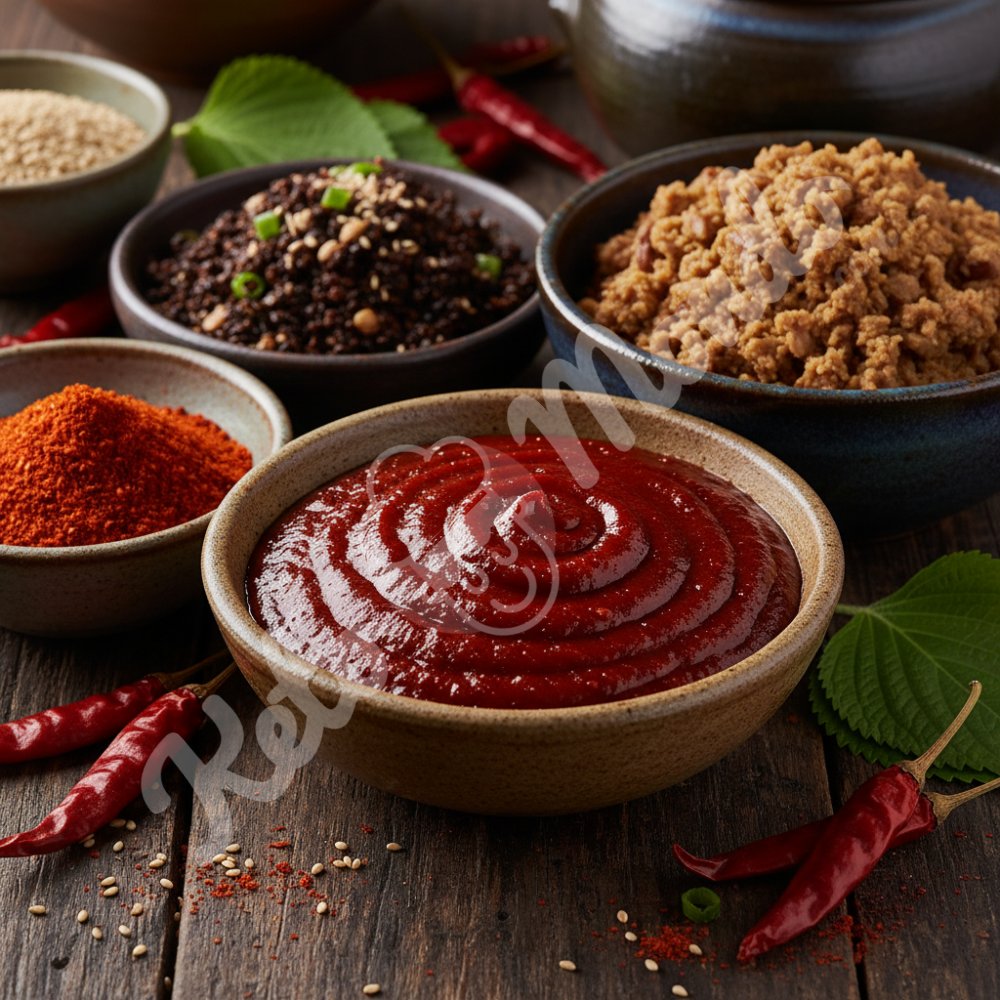
Spicy is one of the undeniable signatures of Korean cuisine. Gochugaru, gochujang, sun-dried chili peppers — these spices create a rare intensity of sensory stimulation that many people subconsciously crave in sugar. But unlike sugar, spiciness absolutely does not cause any devastating glycemic spike. It creates total sensory engagement, internal warmth and immediate satisfaction without any metabolic disturbance. It's a way to wake up the body without attacking it.
What fascinates me about this approach is that it offers real and lasting satiety: the spiciness satisfies the mouth, creates a sensation of sensory 'fullness', and allows the body to signal satiety without having to rely on a massive glycemic load. For someone following a low-carb diet, this is an invaluable tool. Spices become strategic allies, guides towards satisfaction that no longer depends on artificial sweetness. We learn to love the relief rather than the softness of sugar.
Acidity also plays a major role in our culinary balance. A hint of lively acidity instantly awakens the palate, creates striking contrasts and mechanically increases the feeling of satiety. In a low-carb approach, the acidity provided by fermented foods or quality vinegars also considerably helps the digestion of fats and proteins. It's a happy convergence: what makes the meal sensorially exciting is also what helps the body function optimally. It is the intelligence of taste.
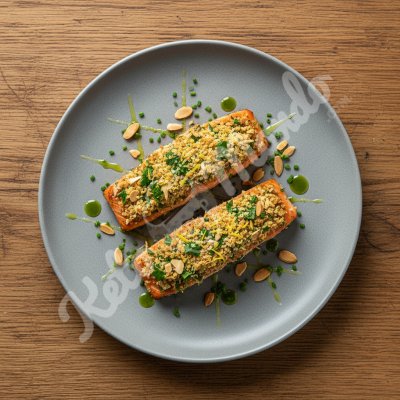
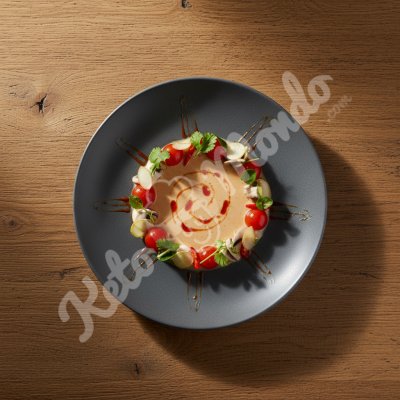
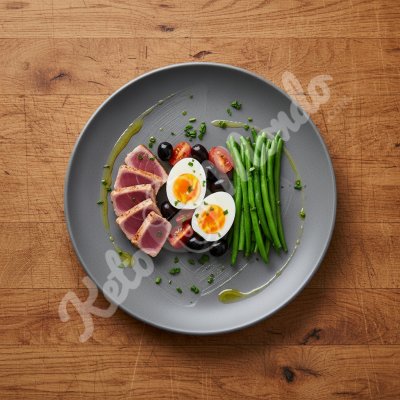
The bright red of the pepper, the dark green of the herbs. A plate that vibrates even before being tasted.
Combining deep umami, stimulating spiciness and lively acidity creates a meal of remarkable intensity, without ever needing sugar or flour. It's a fundamental lesson that Korean cuisine has taught for generations: true richness of taste comes not from easy sweetness, but from the complexity of aromatic tensions. It is a gastronomy of the character and the truth of the product.
What I like about this reality is that it is not a passing fad. Korean cuisine did not invent umami or fermentation to meet a modern 'low-carb trend'. These elements have always existed because they worked, because the human body responds to these flavors in a positive and stable way. It is biological wisdom enshrined in our most ancient traditions. We are only rediscovering it with our tools today.
Today, when we talk about a low-carbohydrate diet, we must state this truth loud and clear: the absence of sugar never means the absence of pleasure. On the contrary, it means a rediscovery of true pleasure, that which does not create exhausting energetic oscillations, that which satisfies without creating addiction. Korean cuisine is a valuable and inspiring guide here. She shows us that an intense, complex and deeply satisfying diet is not only possible, but desirable without sugar or flour.
When I prepare a plate, I always look for that maximum intensity without resorting to simple carbohydrates. A tasty broth, vegetables cooked with extreme care, a fermented dough to accompany, generous spices and cooking that honors the integrity of the product. The result is a plate that speaks loudly, satisfies every cell, and leaves the body in comfortable and lasting stability. This is my definition of metabolic haute cuisine.
I put the bowl on the table. The smell is powerful, complex, alive. I know this meal will carry me through until tomorrow.
Intensity is about depth, not sugar. This is the lesson of Umami.