
When the plant becomes sovereign
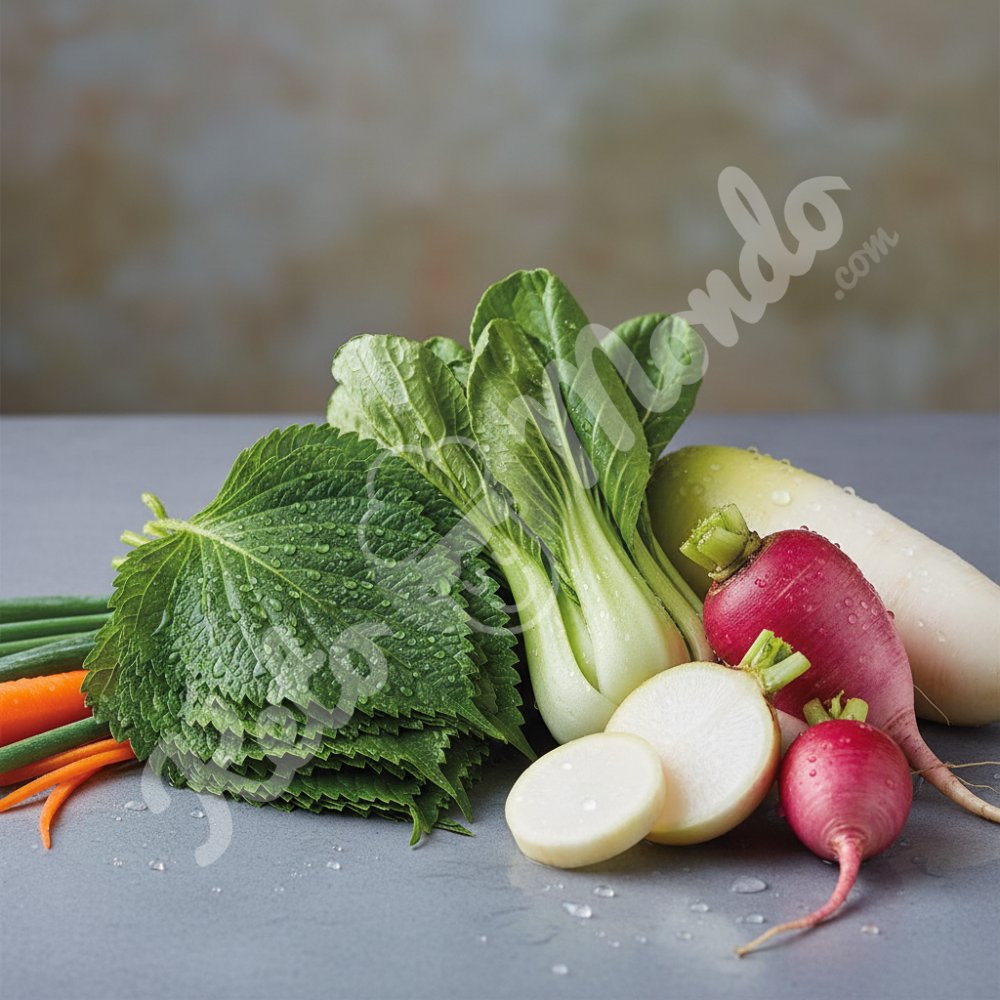
In my childhood garden, vegetables were not extras. They were the protagonists of a daily play. We call 'Namul' these seasoned, blanched or sautéed vegetable dishes, which constitute the soul of the Korean table. I grew up watching my mother transform simple perilla leaves, fern shoots or bellflower roots into flavor masterpieces. Here, the vegetable is not what we eat 'because it's healthy', but because that's where the complexity lies. For us, a vegetable is never 'just' a vegetable; it is a texture to respect, a bitterness to balance, a freshness to exalt. And by a fortunate coincidence of history, these plants that we cherish are almost all naturally low in carbohydrates.
Putting non-starchy vegetables at the center is a radical change of paradigm. In the Western vision, we build the meal around meat and 'add' vegetables for color. In Korea, we build a vegetable harmony, and the protein is inserted as an accent. This approach is the key to a successful and sustainable low-carb diet. If you see vegetables as a punishment or a simple support for fat, you will eventually get bored. But if you learn to cook them with the dignity they deserve — playing with cold-pressed sesame oils, fermented garlic, toasted seeds — they become the main source of your pleasure. The plant is no longer an accompaniment, it is the destination.
The secret of dark leaves
The vegetables we favor — cabbage, spinach, white radishes, wild herbs — are concentrates of life. They are not filled with empty starch, but with minerals drawn from deep in the soil, fiber that nourishes our microbiota, and phytonutrients that protect our cells. When you remove grains from your diet, you create a void that only these dense plants can fill. We are not trying to fill our stomach, we are trying to saturate our cells with nutrients. A plate of varied Namul provides more magnesium, potassium and vitamins than a mountain of rice or pasta.
This density has a direct effect on our metabolism. The fiber in non-starchy vegetables slows the absorption of nutrients, ensuring a slow, steady release of energy. This is the basis of glycemic stability. In Korea, we know that eating bitter vegetables at the start of a meal prepares digestion and calms the appetite. It is a biological wisdom that we practice without thinking about it. The body recognizes nutritional richness and sends satiety signals long before the stomach becomes distended. It’s satiety through quality, not through volume.
A pharmacopoeia on the plate
Korean cuisine is calendar cuisine. In spring, we look for the bitter shoots that wake up the liver after winter. In summer, water-filled vegetables to cool the blood. In autumn, the roots prepare the body for the cold. This seasonal rotation is not only a gastronomic pleasure, it is a biological necessity. By varying vegetables according to the earth's cycles, we offer our body a constantly evolving palette of nutrients. For those who follow a keto lifestyle, this variety is the bulwark against monotony and deficiencies.
Eating seasonally also means eating foods at the peak of their life force. A vegetable that has grown in the sun, in its natural time, has an aromatic and nutritional signature much superior to a forced greenhouse product. This intensity of taste is what allows us to do without sugar. When a vegetable has flavor, it doesn't need any artifice. It is sufficient on its own, enhanced by a touch of sea salt and a drop of sesame oil. It's a lesson in humility and efficiency: nature knows what we need, we just have to follow its rhythm.
The art of not distorting
The way we treat vegetables in cooking reflects our esteem for them. Blanch quickly to maintain crunch and color, squeeze gently to extract excess water without breaking the fibers, season by hand so that the heat of the skin helps the flavors penetrate... these are gestures of love. In Korean cuisine, they say that the taste comes from the 'fingertips'. This meticulous attention transforms a simple ingredient into a therapeutic food. For a low-carb diet, these techniques are essential because they preserve heat-sensitive enzymes and vitamins.
Learning to respect vegetables also means learning not to drown them in heavy or sweet sauces. We use fermentation — kimchi, doenjang — to add depth without adding empty calories. The spiciness of chili, the acidity of rice vinegar, the umami of soy... these flavors enhance the plant without masking it. It’s a kitchen of transparency. We taste the earth, we taste the rain, we taste the sun. And this direct connection to the origin of our food is what grounds us in lasting health.
Plants as a pillar of the microbiota
We can't talk about vegetables in Korea without talking about our invisible allies: bacteria. Non-starchy vegetables are the ideal medium for fermentation. By eating our Namul and Kimchi, we feed an army of micro-organisms that work for our immunity and mental clarity. A keto diet that ignores this plant-based and fermented dimension would be incomplete, even risky for intestinal balance. The prebiotic fibers in vegetables are the fuel for our inner health.
In conclusion, putting the plant back at the center is not an option, it is the foundation. This is what transforms a 'diet' into a culture of life. By adopting this Korean vision, where vegetables are king, you will discover a new freedom. You will no longer eat 'less carbs', you will eat 'more life'. And your body, in its silent wisdom, will thank you with unwavering energy and a newfound joy of living.