
Beyond illusory sweetness
In our modern collective imagination, the word 'comfort' has become almost synonymous with 'sugar'. We have been taught to seek consolation in pastries, ice cream or sugary drinks as soon as our spirits flag or the cold sets in. But it's an illusion, a metabolic trap. True comfort, that which truly soothes the body and mind in the long term, has never needed sugar. British comfort food — that of steaming stews, Sunday roasts and thick soups — draws its strength from the richness of protein and the bounty of natural fats.
Redefining comfort means understanding that satisfaction does not come from a fleeting insulin peak, but from a deep and lasting satiety. It's the heat of bone broth simmered for hours, the melting texture of a confit lamb shoulder, the crunch of perfectly grilled chicken skin. These sensations speak to our genes, to our evolutionary history. They tell us that we are safe, that we have the necessary resources to face winter or fatigue. Sugar is just background noise; protein and fat are the main tune.
The lubricant of the soul and body
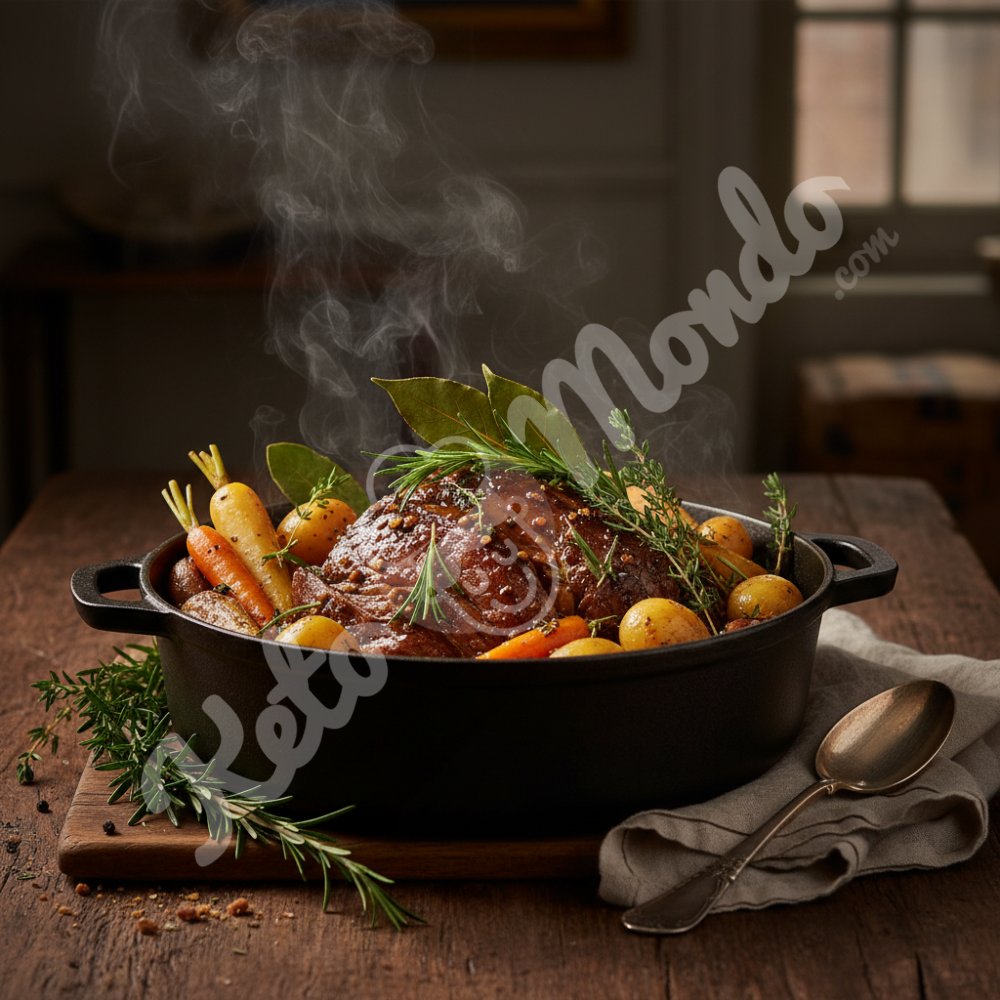
In my kitchen, fat is not an enemy, it is a vector of flavor and a tool for well-being. A good pot roast — slow-braised beef with herbs and some root vegetables — would be nothing without the fat that emulsifies in the cooking juices. It is this creaminess which coats the palate and brings this feeling of immediate fullness. Grease is the lubricant of the soul; it calms the nervous system and signals to the brain that famine is far away.
Using farm butter, quality lard or duck fat is not a guilty luxury, it is a return to common sense. These fats provide a depth of flavor that no low-fat substitute will ever be able to imitate. They allow you to cook vegetables so that they become irresistible. Leeks stewed in butter or Brussels sprouts sautéed in bacon become party dishes. By embracing natural fats, we rediscover the pleasure of eating without restriction, by simply listening to our body's signals of satiety.
The depth of authentic sauces
The food industry has flooded our kitchens with ready-made sauces, all loaded with sugar to mask the mediocrity of the basic ingredients. By cooking without sugar, you are forced to become creative again. We learn to build complex flavors using wine reductions, concentrated homemade broths, fresh herbs like rosemary or thyme, and warming spices. We discover that the acidity of cider vinegar or the spiciness of a strong mustard can advantageously replace artificial sweetness.
A reduced red wine sauce, bound with a little marrow or cold butter, is infinitely richer and more satisfying than ketchup or industrial barbecue sauce. She respects the product, she emphasizes the quality of the meat instead of stifling it. This cuisine requires a little more time, of course, but the result is an explosion of authentic flavors that never tires the palate. It's an adult's cuisine, a cuisine that respects the sensory intelligence of those who taste it.
The end of the emotional roller coaster
The problem with sugary comfort is that it's followed by a crash. We feel good for twenty minutes, then fatigue and irritability sets in, pushing us to seek a new dose. It's an exhausting cycle for the body and the mind. A sugar-free comfort dish high in protein and fat creates honest satiety. You feel full, calm and stable for hours. There's no call for dessert, no mid-afternoon cravings.
This glycemic stability has a direct impact on our emotional state. We become more resilient in the face of stress, more patient, more present. Comfort then becomes a lasting state, a solid foundation on which one can lean, rather than a temporary crutch. By properly nourishing our cells, we calm our mind. This is the magic of nutrition properly understood: body and soul are one, and what we put on our plate dictates the quality of our presence in the world.
The cuisine of our British ancestors
Looking back, traditional British cuisine was naturally low in fast carbs. Before the massive arrival of colonial sugar and the industrialization of cereals, our ancestors ate what the land offered: livestock raised in the open air, game, fish from our coasts and rustic vegetables. Bread was a luxury or modest accompaniment, not the basis of every meal. Desserts were rare and reserved for special occasions.
By returning to this authentic form of cooking – rich, protein, fatty and without added sugar – we are not following a trend, we are honoring an age-old tradition. We are rediscovering the wisdom of those who came before us, those who knew that to work hard and stay healthy in a demanding climate, you needed dense, nourishing food. It is an act of resistance against the standardization of taste and a celebration of our noblest culinary heritage.
The real comfort is in the raw plate
My invitation is this: the next time you need comfort, don't turn to the cookie cupboard. Turn on your oven, brown a nice piece of meat, prepare a rich sauce with the cooking juices, and serve it all with a generous portion of buttery green vegetables. Take the time to savor each bite, to feel the warmth invade your body and the satiety soothe your mind.
You will then discover that true comfort is simple, honest and deeply nourishing. It leaves no room for regret or guilt, only gratitude and vitality. Cooking is an act of love for yourself and others. By choosing raw ingredients and refusing the ease of sugar, you choose life in all its richness and depth. Enjoy your meal, and let yourself be carried away by the quiet force of true comfort.