
Andean simplicity
I grew up with a meal structure that never changed, an unwritten rule but engraved in my family's daily life: one protein, one vegetable, one herb. That's all. In the modern world, we tend to believe that the richness of a meal is measured by the multiplication of accompaniments, the stacking of textures and the complexity of sauces. But in the Andes, where resources demand respect and energy is a precious currency, we have learned that perfection is not when there is nothing left to add, but when there is nothing left to take away. This culinary trinity — muscle, fiber, aroma — is a complete architecture. It leaves no room for emptiness, no room for superfluity. It meets all the body's needs without ever cluttering it.
Protein, whether from free-range beef, mountain lamb or river fish, is the anchor of the meal. It is what binds us to the earth and gives us the strength to travel across it. It creates a primordial satiety, a satisfaction that goes down to the bones. Non-starchy vegetables, on the other hand, provide the bulk, fiber and micronutrients needed without the glycemic load that weighs down the mind. Finally, herbs and green sauces bring joy, the spark that transforms the act of eating into a moment of pure pleasure. When these three elements come together, the body immediately recognizes that it has everything it needs. The desire to look elsewhere, in sugars or starches, goes away by itself.
Choice of proteins
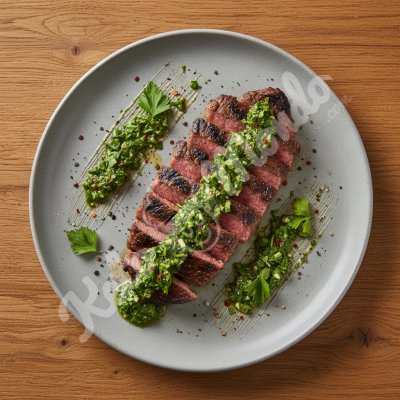
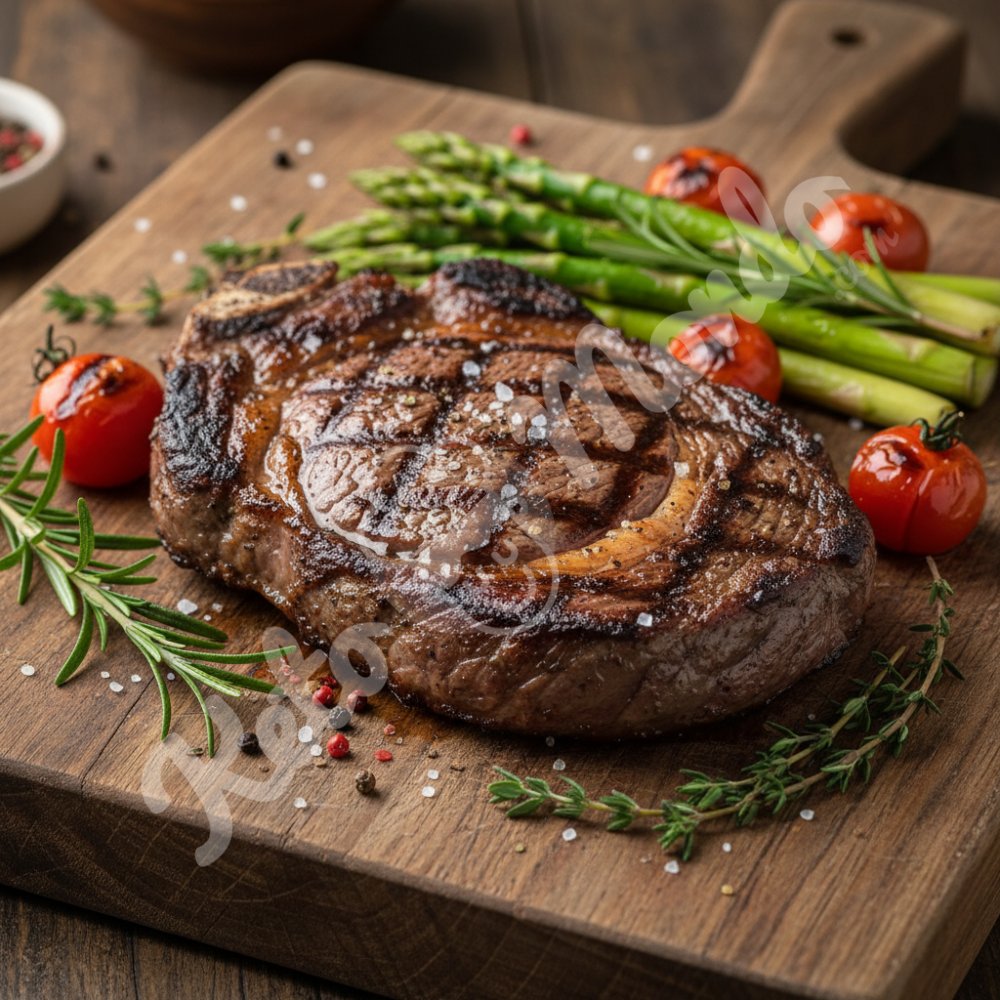
A protein exposed to an open flame reveals its true nature. Fire does not forgive mediocrity; it magnifies the quality. No need for breading, flour or thickeners to make a piece of meat interesting. No need for syrupy sauces to mask a lack of taste. A good protein, cooked simply with coarse salt and perhaps a dry herb rub, is enough on its own. It develops its own complexity through the caramelization of its fats and the concentration of its juices. It's a lesson in culinary honesty: we learn to appreciate the texture of the muscle, the flavor of the fat, the strength of the fiber. And this honesty results in a clear metabolic response: the body knows exactly what it's getting and how to use it.
What I've observed over the years is that when protein is the centerpiece, everything else naturally falls into place. Energy becomes stable because the body is not put through the insulin roller coaster. Satiety lasts for hours, as amino acids and fats send long-lasting fullness signals to the brain. We don't finish the meal with that 'holey' feeling that we often feel after a dish rich in carbohydrates. We feel solid, anchored. It's as if a quality protein had the intrinsic ability to balance our entire system, making us more resilient to stress and effort. It is the fuel of mountain builders.
Vegetables that hold
In my kitchen, vegetables are not a sidekick. They must have character, hold, and be able to withstand the intense heat of the grill or ashes. Non-starchy vegetables—fleshy peppers, red onions, summer squash, wild asparagus or broccoli—are ideal fire companions. They do not disintegrate, they do not become a shapeless mush. On the contrary, the fire concentrates their flavors, caramelizes their natural sugars without adding any, and gives them a crunchy and smoky texture that delights the palate. They bring a necessary freshness which counterbalances the richness of the meat, creating a perfect balance between earth and fire.
Eating a plate of a generous portion of protein and a mountain of grilled vegetables is a 'clean' satiety experience. You feel full, but never bloated. We have a full stomach, but a light mind. This is a fundamental difference with the satiety caused by starchy foods such as potatoes or rice, which is often accompanied by a feeling of heaviness and digestive slowdown. With fibrous vegetables, transit is stimulated, hydration is maintained and the taste pleasure is increased by the variety of colors and textures. It is a celebration of plant diversity put at the service of efficient physiology.
Absence of cereals as clarity
I often notice that those who adopt this meal structure—protein, vegetables, herbs, no grains—discover a mental clarity they never suspected. It's as if a veil is lifted. No more 2 p.m. brain fog, no more hunger-related mood swings, no more reliance on sugary snacks to tide you over until the evening. By eliminating grains, we eliminate the metabolic background. The body stops fighting against glucose spikes and begins operating in its default mode of fat burning and energy stability. This clarity is not only physical, it is also psychological: we feel more present, more responsive, more in tune with our environment.
This feeling of freedom is addictive. Once you have tasted this energy autonomy, it becomes very difficult to go back. We realize that cereals were not a need, but a habit, often imposed by a culture of ease and low cost. By returning to the Andean structure, we regain control of our own biology. We no longer eat because the clock says so or because sugar calls us, we eat to feed a complex and magnificent machine that deserves the best fuel. It is an act of individual sovereignty.
Generosity through quality
I am often asked if this way of eating is not too restrictive. My answer is always the same: look at my plate. It is overflowing with colors, juices, textures and aromas. The generosity of Andean cuisine lies not in the accumulation of empty calories, but in the abundance of quality. A large piece of juicy meat, grilled vegetables in abundance, a green sauce dripping with freshness... where's the restriction? It's a daily celebration cuisine, a celebration of the densest and most nutritious nature offers us. We don't count calories, we count nutrients and pleasures.
This structure allows you to eat your fill, without guilt and without calculation. It relearns us to listen to our natural satiety signals, which have been scrambled by decades of processed food. By eating real foods, simply prepared, we rediscover the pleasure of authentic satiety. It’s a newfound peace with food. We eat well, we eat generously, and we feel better than ever. This is the legacy that I carry and that I wish to share: proof that simplicity is the ultimate form of sophistication, and that the path to health involves returning to the essential, to fire and earth.