
The earth as a benevolent dictator
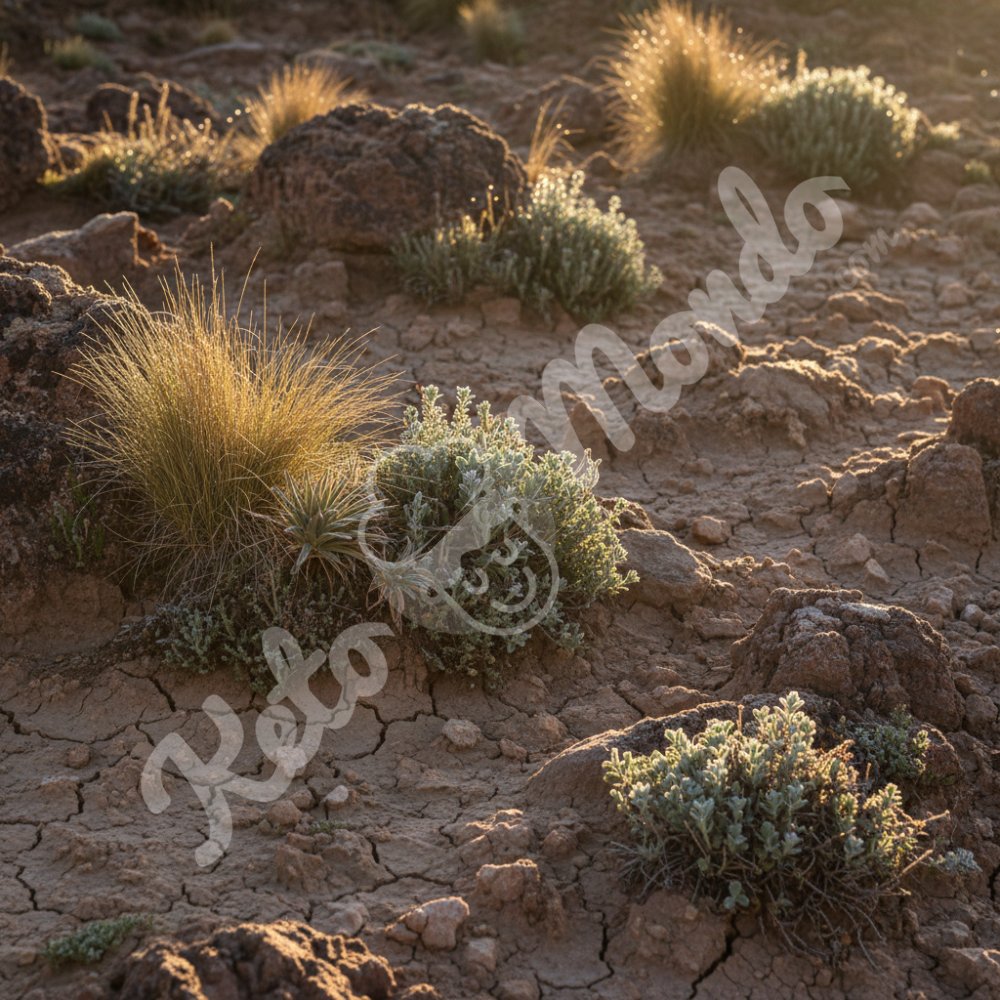
I never really had the luxury of choosing what I ate based on my desires or current trends. In the Andes, the land chooses for you. She is a dictator, certainly, but a benevolent dictator who knows the needs of her children better than anyone. At the altitude where I grew up, nature's cycles are short and brutal. Cereals that require heat and long growing periods, such as wheat or lowland corn, cannot survive here. White flours and refined sugars are foreigners, imported products that have no roots in our rocky soil. What grows here are hardy plants, resilient grasses, and animals capable of turning short grass into muscle and fat. This is our raw reality, our culinary horizon.
It turns out that this geographic limitation, which some might see as poverty, is actually a metabolic blessing. The field, by refusing to support the massive culture of carbohydrates, has naturally pushed us towards a diet rich in proteins and fats. It's no coincidence that mountain people are often the hardiest. The logic of the territory imposes a way of eating which corresponds exactly to what modern science today calls 'low-carb' or 'keto'. But for us, it's not a diet, it's simply the logical response to what the landscape offers us. By accepting this constraint, we have discovered a health and vitality that the artificial abundance of the plains tends to stifle.
Ancestral adaptation
My ancestors inhabited these peaks for millennia. They didn't 'choose' a diet after reading clinical studies; they adapted. This adaptation has taken place over generations, engraving in our DNA a preference for dense and stable fuels. Our physiology has aligned with the territory. The Andean body is a machine optimized to burn fat and use proteins with formidable efficiency. The absence of refined cereals was never experienced as a deprivation, because the body did not demand them. He demanded the substance, heat and sustainable energy that only livestock products and mountain plants can provide.
This is a fundamental point: what we eat is the continuation of a multigenerational adaptation. When I refuse bread or sugar, I am not just following a dietary rule, I am respecting a biological heritage. My body thrives on a low-carb diet because that's how it was shaped by centuries of living at altitude. To ignore this reality is to put oneself in conflict with one's own nature. By returning to the foods of my region, I find an inner harmony, a feeling of 'correctness' that industrial products will never be able to offer me. It is a reconciliation with the long term of evolution.
Availability as wisdom
Territory determines availability, and availability forges culinary wisdom. At high altitude, we learn to value each resource. We raise llamas, alpacas and sheep because they are the only ones who can transform high altitude pastures into noble food. We grow root vegetables that tolerate frost and herbs that concentrate their aromas to survive the scorching sun of the day and the freezing cold of the night. The result is a kitchen built around what really exists, here and now. It is a cuisine of immediacy and truth, where artifice has no place.
I often notice that when people start importing foods that are not their home turf — processed grains, industrial vegetable oils, hidden sugars — their health declines rapidly. It is as if the body recognizes that these substances are 'intruders' which do not correspond to its ancestral upbringing. By eating what is available locally and naturally, we ensure maximum biological compatibility. Wisdom is not about wanting to eat everything all the time, but about eating what makes sense where you are. It is this intimate connection between the ground and the plate that guarantees the sustainability of our well-being.
Respect for the place
Cooking without imposing your will against the territory is a form of deep, almost spiritual respect. It's not a restriction, it's an acceptance of reality. When we stop wanting the mountain to produce what it cannot give, we begin to see the incredible richness of what it already offers. We discover the unique flavor of meat raised in the fresh air, the complexity of a wild herb, the perfect texture of a vegetable roasted in the ashes. This reality is already optimal. It does not need to be 'enhanced' by food technology or chemical additives.
The ancients who lived healthily and for a long time in these extreme conditions did so by listening to the earth. They did not seek to impose intensive agriculture or depend on food convoys from far away. They cooked with what was there, respecting the seasons and the boundaries of the landscape. This respect for place results in robust health and clarity of mind. By adopting a low-carb diet, we only regain this respect. We stop asking our body to process substances it's not designed to handle, and we give it back the food that built it.
For those who discover this path
If you live far from the Andean peaks, in a modern city or a fertile plain, you do not need to reject your own environment. But you can learn from our logic. Look at what grows naturally around you, what thrives without artifice, what local breeders produce with passion. You will probably find that this approach also leads you towards a simpler, denser diet lower in refined carbohydrates. Because nature, wherever it is respected, tends towards balance and nutritional density. Excess sugar and starch are almost always the result of human intervention that has broken the connection with the territory.
The territory never lies. It is the mirror of our real needs. By learning to listen to it, you will learn to know yourself better. You will discover that satiety does not come from the quantity, but from the appropriateness of the food in relation to your environment. Whether you are in the Andes or elsewhere, the path to health is the same: a return to basics, a respect for natural cycles and a celebration of real food. Listen to your land, listen to your body, and you will see that eating well becomes obvious, a daily act of gratitude towards the life that supports us.