
Slowness as a taste and metabolic technique
In my daily practice as a chef, slow cooking is never just a 'slow-food' fashion for magazines; it is an ancestral and rigorous method to extract the absolute maximum from each product. When we commit time, we offer proteins and vegetables a molecular transformation that creates a texture and richness that starchy foods often seek to compensate for artificially. A broth concentrated by hours of simmering, vegetables preserved in their own juice, meat cooked for a long time at low temperature already have this quality of sensory 'stuffing' which satiates the mind and body without the need for a single gram of starch.
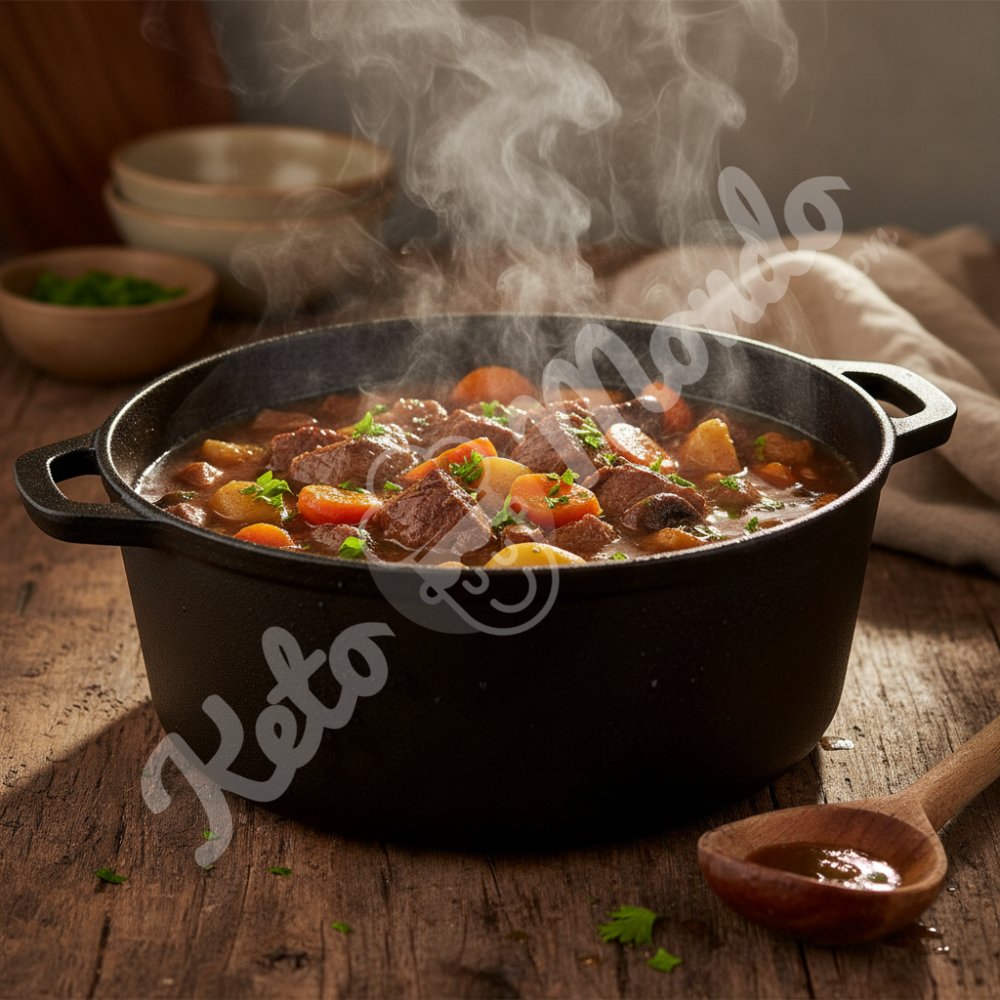
The lid of the casserole barely vibrates. A murmur that has lasted since morning.
Slowness also radically changes the way the body receives and processes the meal. Digestion is not challenged by fast sugars which require a brutal hormonal response; the very structure of the dish, dense in stable lipids and proteins predigested by gentle heat, allows gradual, almost imperceptible absorption. This prolonged availability of energy avoids the need for a sugary 'reminder' at the end of a meal. And on a purely taste level, we gain a complexity that rush ignores: the flavors evolve in the mouth, aromatic tensions appear and chewing becomes a pleasure that lasts much longer than with a simple dish of pasta.
I remember my grandmother, she never looked at the clock. She looked at the color of the juice. It was his only measure of time.
Heritage, textures and practicality
Our ancestors knew how to manage time with a wisdom that we have lost. The dishes that simmered all day on the corner of the stove were not there to fill the stomach with cheap starch, but to structure the working day and offer real comfort upon return. Today, in a low-carb approach, relearning these gestures means accepting that cooking requires presence and patience. This is not a deprivation of liberty; it is a profound redefinition of eating comfort. We eat less empty mass and more foods that last, which really support the body and mind over time.
In professional cooking, I observe that slowness gives incredible room for maneuver: you can play with a few ingredients and obtain a plate of incredible richness. Slow cooking becomes a way of compensating for the absence of starchy foods with depth and sensory satiety. It is a cultural transformation where the time invested becomes the most precious ingredient, the one that costs nothing but changes everything.
What surprises many people when they try to cut down on starchy foods is the fear of the lack of texture, of that 'full' feeling that a plate of rice provides. But Slow delivers just that, with superior finesse. A vegetable cooked for a long time becomes tender, almost creamy, without adding flour. Braised meat falls apart at the touch of a fork. The juices, concentrated by slow evaporation, coat and coat each mouthful with a film of pure flavor. We obtain this feeling of total fullness, without the carbohydrates which would disrupt the metabolism.
The fork sinks in without resistance. The fat has melted into the flesh, making it silky.
I've seen people radically transform their relationship with food by simply adopting this philosophy: less rush, more stoves. Cast iron casserole dishes are once again becoming the stars of the kitchen. We forget prepared meals and microwaves. We find the natural rhythm: meat taken out of the cold in the morning, thrown into the low oven at noon, which waits patiently for us to return. The result is never disappointing. The flavors are amplified, the fibers softened, the proteins made ultra-digestible. It is a cuisine that respects biological time.
There is also a hidden saving in slowness: we can use less noble cuts of meat, storage vegetables which are not the most tender. Duration levels differences, makes everything noble through patience. It's a lesson that peasant kitchens around the world know by heart: the scarcity of resources becomes an opportunity for creativity and metabolic finesse.
Those who take the plunge quickly find that this slowness enriches much more than the meal: it invites contemplation, a certain humility in the face of the raw product. And on a metabolic level, it's absolutely clear: a plate prepared slowly nourishes for a long time, without the peaks and valleys that inevitably accompany fast starchy foods. Slowness then becomes a joyful and tasty rebellion against the modern rush that makes us sick.
The sun is setting. The smell of stew fills the house. I'm not hungry, I just can't wait to taste the time that has passed.
Eating slowly means you live longer. It's that simple.