
A natural evolution
As I got older, I radically changed the way I thought about the plate and conceived the meal. Spectacular excesses and culinary displays of force become less attractive; the surgical precision of cooking, the absolute quality of the fats and the scrupulous respect of the digestive rhythm now take the forefront. It is not an externally imposed discipline, but a finer, almost loving attention to the body and the overall experience of the meal. We learn that true generosity does not lie in quantity, but in the accuracy of the nutritional and sensory intake.
The gesture is slower, but safer. The eye sees what the hand should do before it even moves.
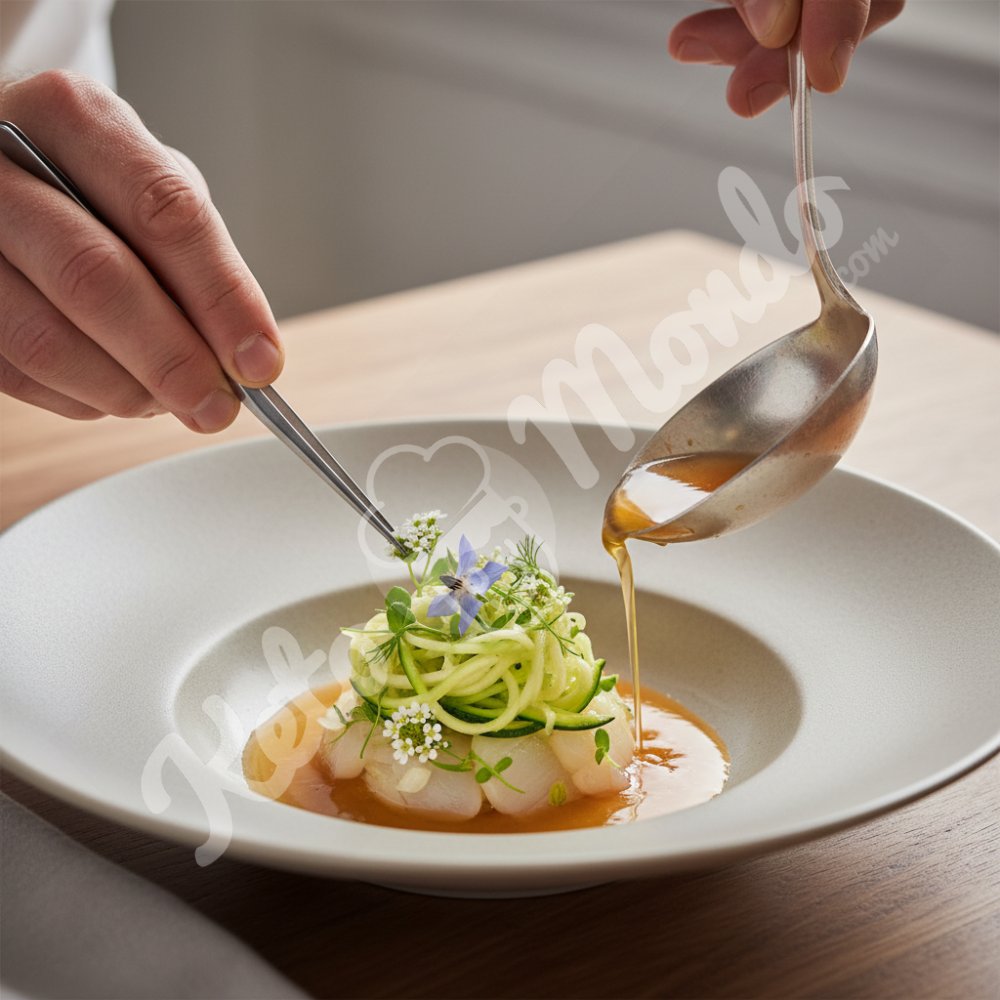
Lightening up in the kitchen absolutely does not mean sinking into sad austerity or bland minimalism. This means choosing with discernment what really serves the body and mind: a piece of fish perfectly cooked through, a light sauce that highlights the flavor without overwhelming it, a keeping vegetable that provides chew, color and fiber. This economy of gesture protects metabolic health and allows you to prolong the pleasure of eating, year after year, without ever feeling weighed down. It is a form of politeness towards one's own organism, a recognition of its limits and its real needs.
For me, the low-carb practice fits naturally into this movement of maturity: less sugars and flours which confuse the issue, more attention to raw products. This choice promotes soothed digestion, stable energy throughout the day and a relationship with meals that becomes more conscious, more lasting and more joyful. We no longer eat to forget, but to remember who we are and what makes us feel good.
I remember my beginnings, where I wanted to put everything on the plate. Today, I'm looking for what I can remove without losing the soul of the dish.
Economy of gesture and truth of taste
When we get older, we willingly give up the appearance of generosity that sometimes characterizes the cooking of young people: the overloaded dishes, the overly abundant sauces, the excessive portions. What's left is the pure stuff: how to make every ingredient really count, how to prepare a meal that deeply nourishes and delights without causing digestive fatigue. It is a precious learning, a kind of stripping that reveals the intrinsic beauty of simple things. This is where true culinary mastery lies.
Young chefs often ask me why I use less cream, less butter, less of anything that seems 'rich'. The answer is disarmingly simple: because age has shown me that too much suffocates the taste and the body. An excessively rich dish, difficult to digest, takes away from real pleasure rather than enhancing it. When we reduce carbohydrates, this taste education becomes even easier: we focus on real flavors, on authentic textures, not on systematic masking by sugar or starch. We find a sensory honesty.
There is also a question of respecting time: each minute of cooking, each gesture must be just right. I've seen too many cooks throw away hours of work on unnecessarily complex dishes. Lightening also means respecting the time of the product, the time of the cook and the time of the diner by looking for the essentials. It is a form of personal and professional ecology. We learn to trust the product, to let it speak without interrupting it with noisy fireworks.
The knife sliding across the board. Clear, crisp sound. The kitchen is a temple of precision.
Ultimately, growing older in the kitchen means becoming more honest with yourself and with others. We stop pretending, we stop trying to impress, and we finally start actually serving. And this honesty becomes a form of supreme beauty — that of a dish that says exactly what it is, without artifice, but with infinite grace. Low-carb, in this context, is not an ideological choice or a constraint: it is a natural and tasty consequence of the life path we have traveled. It is the signature of a full life and a respected body.
I serve the broth clear. It is clear, but its taste is of incredible depth. It is the result of fifty years of cooking.
Eating right means living better. It's that simple, and it's a lifetime's work.
Accuracy is the luxury of maturity. No sugar, no regrets.