
A vegetable that is close to the body and the earth
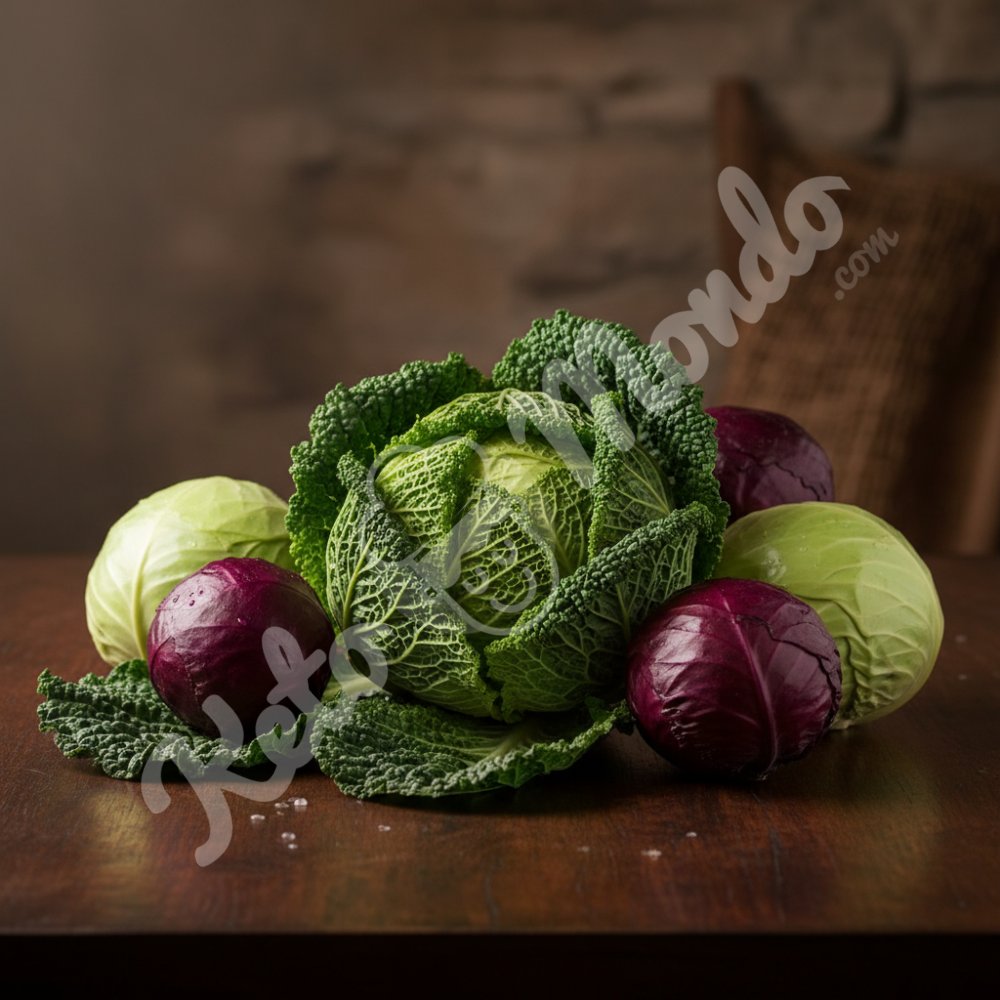
Cabbage is not an ersatz, nor a simple accompaniment by default: it is an unshakeable pillar of our culinary identity. In our harsh regions, it has fed entire families during months of intense frost, because it has this unique ability to withstand prolonged storage, brutal processing and live fermentation. But its value goes far beyond simple survival logistics: it is a leaf that offers real chewing, satisfying volume and deep satiety without ever providing a glycemic load that would disrupt the body's balance. For an organism seeking stability, cabbage plays a leading, almost protective role.
The crunch of a raw cabbage leaf. A freshness that wakes you up.
I still see it in home kitchens, where a dense cabbage soup or braised side dish can stand as a main dish in its own right. Its subtle bitterness, its changing texture and its incredible capacity to accommodate fats and aromatics make it an ideal support for a cuisine with character. We're not talking about modern nutritional marketing here; we are talking about concrete use, proven over time: cabbage nourishes, it satiates, and it integrates with natural fluidity into a plate rich in animal proteins and healthy fats. It is the ideal companion for bacon and smoked fish.
I remember the cabbage fields under the autumn mist. An army of round heads, ready for winter.
Culture, memory and sensory versatility
Cabbage carries a long and silent history. It crosses times and tables, it combines with smoked, salty, long broths and pressed oils. Its presence is a sort of quiet evidence: you never need to add sugar to make it palatable. On the contrary, it copes magnificently with tension, lively acidity and lactic fermentation. In a low-carb kitchen, it advantageously replaces the disproportionate place of processed cereals because it gives body and consistency to the meal without weighing it down with unnecessary carbohydrates which tire the pancreas.
The beauty of cabbage also lies in its radical humility. It lends itself to all canning, it fits into jars that last, it goes well with the richest meats. Its nutritional value and its ability to hold the chew make it a strategic ally for meals that require energy maintenance throughout the day. For those looking for stable energy, it is a resource often underestimated, almost despised by modernity, but profoundly effective. It is the luxury of the poor becoming the wisdom of the healthy.
In cooking, I try to rediscover this forgotten wisdom: using cabbage as a central element, a foundation, rather than as a simple secondary decoration. It’s a way to stay true to my Polish culture and, simultaneously, adopt a diet that supports actual satiety and metabolic health. Cabbage is a lesson in resilience that can be eaten.
The smell of cabbage simmering with a little cumin. A scent of home, of security.
What fascinates people when I suggest they rethink their plate around cabbage is its sensory versatility. Raw, it provides a crisp crunch and a spicy taste that stimulates digestion. Cooked slowly, it becomes soft, almost creamy, revealing hidden flavors. Fermented, it acquires an aromatic depth and acidity that have no equivalent. Braised, grilled in the oven, roasted whole, it adapts to every culinary technique with rustic grace. And each preparation gives it a different sensual value, without ever losing this capacity for satiety that no modern starchy food really equals.
For those looking to structure a low-carb meal without falling into dreary monotony, cabbage is an exhaustive answer. A generous portion nourishes without any blood sugar guilt. We can then focus on the quality of proteins and fats, knowing that the volume and fiber come from the cabbage, which works for our digestive health rather than against it. It’s a pact of trust with plants.
In professional kitchens, too many chefs still ignore cabbage or relegate it to a minor garnish. But those who understand its strength voluntarily reintegrate it: not out of nostalgia, but out of pure metabolic efficiency. Fermented cabbage, taken in a few bites, radically changes the dynamic of a rich plate. The enzymes facilitate digestion, the ancient aromas create a deep taste consistency that soothes the brain.
I also think of domestic savings, which are so important today. Cabbage is cheap and keeps for weeks. For a family looking to eat healthily without sacrificing their budget, this is an invaluable foundation. And culturally, to claim it loud and clear is also to claim a form of dignity — that of eating foods that anchor us, that reflect our history, while supporting our most current biological needs. Cabbage is the link between yesterday and tomorrow.
Ultimately, cabbage is never a compromise or a stopgap. It is a complete food, rich in history and effectiveness. When you really embrace it, you realize that traditional Polish food, far from being the enemy of metabolic health, was already designed around satiety and lasting well-being. Cabbage is living proof, crunchy and tasty.
I cut the cabbage in half. The heart is tight, white, full of promises. It is the heart of my kitchen.