
Time as an invisible ingredient
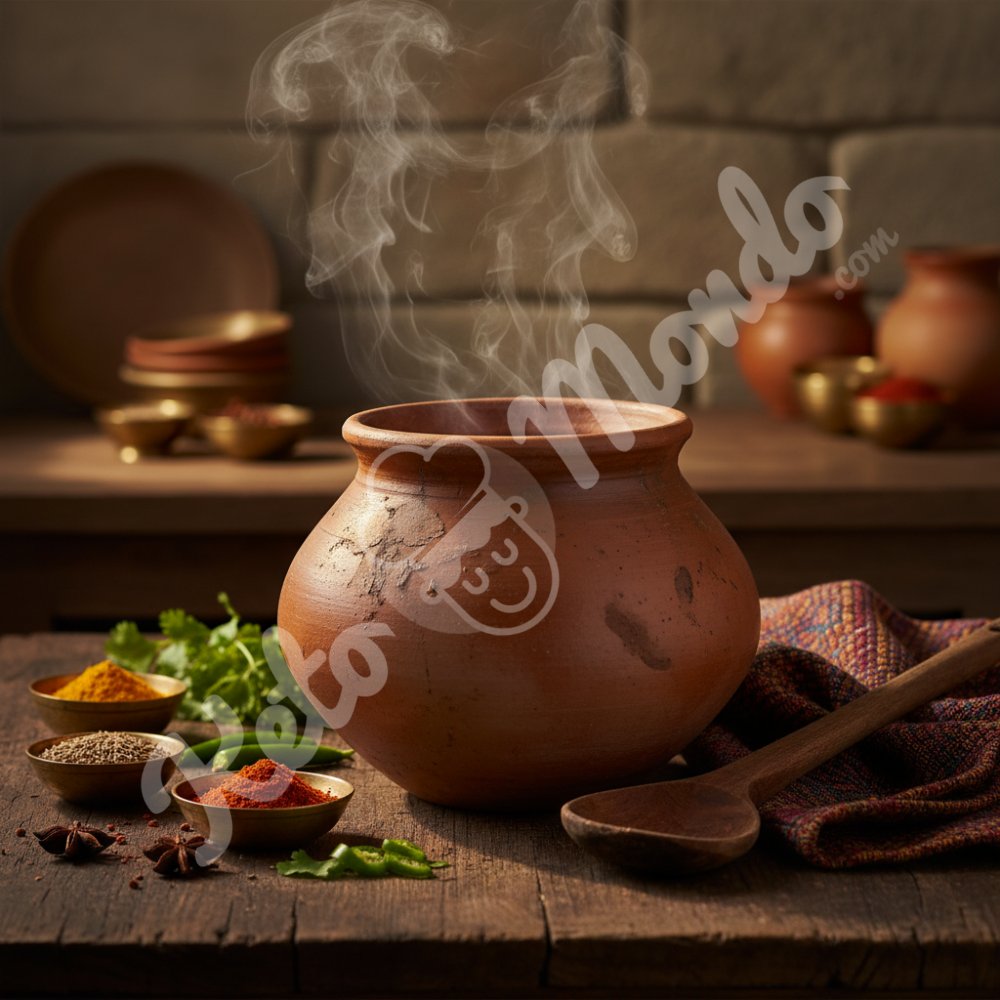
In my memory, the strongest image of my mother's cooking is that of a large earthenware pot, the lid of which was sealed with a ribbon of fresh dough. It was the ritual of 'Dum Pukht', the art of stewing. Once the pot was sealed, it was placed on a bed of dying embers, and we knew nothing would open it for several hours. This act of sealing the jar was an act of faith for me. The ingredients were entrusted to time, gentle heat and darkness. Inside, a secret alchemy was at work: the aromas of the spices did not escape, they circulated, permeating every fiber of the meat and every cell of the vegetables. Time was not a constraint, it was the main ingredient, the one that gave the dish its true soul.
This practice taught me a fundamental lesson about nutrition: the quality of the energy we get from a food depends on the patience we have given it. In Dum Pukht cooking, the flavors are not just juxtaposed, they are fused. The natural fats mix with the juices of the aromatics to create a cooking liquid of incredible density. For someone on a low-carb diet, this method is a blessing. It transforms modest pieces of meat, rich in connective tissues, into an absolutely tender source of proteins and fats. We don't just eat to nourish ourselves, we eat the result of a slow and respectful transformation.
Deep satiety and stability
There is a radical difference between being 'full' and being 'satiated'. Fullness is often the result of a large volume of food—often starchy foods—that distends the stomach but leaves the body starving for real nutrients. The satiety that a slowly cooked dish provides is of a completely different nature. It’s a feeling of inner solidity, a clear signal to the brain that all needs have been met. Because the flavors are so deep and the nutrients so accessible, sometimes a few bites are enough to satisfy a raging hunger. It's the perfect answer to the blood sugar rollercoaster of the modern diet.
When I eat a stew that has been simmering all afternoon, I feel my energy stabilize for the hours to come. There is no peak, no sharp drop, just a slow, steady spread of force. This stability is what allows us to stay focused, calm and productive without having to constantly think about the next meal. Slow cooking frees us from the slavery of impulsive hunger. It offers us the luxury of energy autonomy. By investing time in preparation, we gain valuable freedom in our daily lives. It's an exchange that speed will never be able to match.
The science of tenderness
From a purely physiological point of view, slow cooking is a form of pre-digestion. Gentle, prolonged heat breaks down collagen — that tough structural protein — into rich, silky gelatin. This process makes nutrients much more bioavailable. The digestive system does not have to struggle to extract the nutritional value from the food; the work has already been done by fire and time. For those of us who prioritize fat and protein, this is essential. Smooth digestion is the key to a high-performance metabolism. The less energy we spend digesting, the more we have to live.
Additionally, this method allows spices to release their fat-soluble compounds into cooking fats. Turmeric, black pepper, cumin — all see their therapeutic potential increased tenfold when they are slowly infused into a fatty substance. We don't just eat good food, we ingest a real balm for the digestive system. It is this synergy between cooking technique and choice of ingredients that makes traditional Pakistani cuisine a model of metabolic health. Each sealed jar is a promise of renewed vitality, a way of honoring the complexity of our biology.
A rebellion against immediacy
We live in a world that glorifies speed. 'Fast food' is not just a category of restaurants, it is a state of mind that has invaded our domestic kitchens. We want everything to be ready in twenty minutes, we use microwaves, we favor processed foods which require no effort. But this speed comes at a price: the loss of depth, both taste and nutrition. Choosing slow cooking is an act of resistance. This means that certain things — the most important ones — cannot be rushed. It's relearning to wait, to anticipate, to appreciate the silence of a kitchen where a dish is slowly simmering.
This patience is reflected in our relationship with our own body. If we accept that food takes time to cook, we also accept that our body takes time to change, to heal, to adapt to a new way of life. Slowness teaches us kindness to ourselves. It reminds us that health is not a destination that we reach at full speed, but a path that we travel with consistency. By bringing slowness back to our plates, we bring awareness back into our lives. Each meal then becomes a celebration of duration, a recognition that true wealth is found in what lasts.
The legacy of sharing
Finally, slow cooking is in essence a cuisine of sharing and transmission. A big pot of Dum Pukht is never prepared for just one person. It is a dish that calls for community, family, friends. It’s a food that unites. And because it keeps and reheats so well – often becoming better the next day – it is part of a logic of sustainability. We cook once with love and patience, and we reap the rewards for several days. It is an intelligent management of our energy and our resources, an echo of the way our ancestors managed abundance and scarcity.
Passing these techniques on to the next generation is my mission. I want my children to know that food is more than fuel; it is a link to the past and a promise for the future. By teaching them how to seal a jar, listen to the murmur of steam, and wait for the perfect moment, I give them the tools to take care of themselves in a world that moves too fast. I offer them an anchor, a certainty that no matter the turmoil outside, there will always be a source of warmth, depth and peace in their kitchen. This is where true satiation lies: in the feeling of belonging to a lineage that knows how to take the time to do things well.