
Sugar as a crutch for blandness
In the modern food landscape, sugar has become a sort of universal corrector. It's added everywhere to mask the mediocrity of the ingredients, to compensate for a lack of technique, or to give an illusion of interest to dishes that would otherwise be hopelessly flat. It’s a sensory crutch that has ultimately atrophied our ability to taste nuance. When I observe industrial sauces or even certain modern interpretations of Asian cuisine, I am struck by this omnipresence of glucose. We seek immediate satisfaction, that peak of brutal pleasure that goes out as quickly as it appears. But in the Pakistani culinary tradition that I received, sugar never had this role of covering up poverty. Satisfaction came not from gentleness, but from depth.
Reducing sugar is not an exercise in deprivation if you understand how to build a solid flavor alternative. The sugar masks the flavors; the spices reveal them. When we remove the sugary veil, we discover a world of unsuspected reliefs. It's like going from a blurry, overexposed image to a high-definition photograph where every detail counts. As a cook, my job is to create such sensory richness that the brain no longer demands its dose of glucose. I replace the linearity of sugar with the multidimensionality of aromatics. It’s a transition from addiction to conscious appreciation, a journey that begins with re-educating our taste buds.
The Layered Flavor Architecture
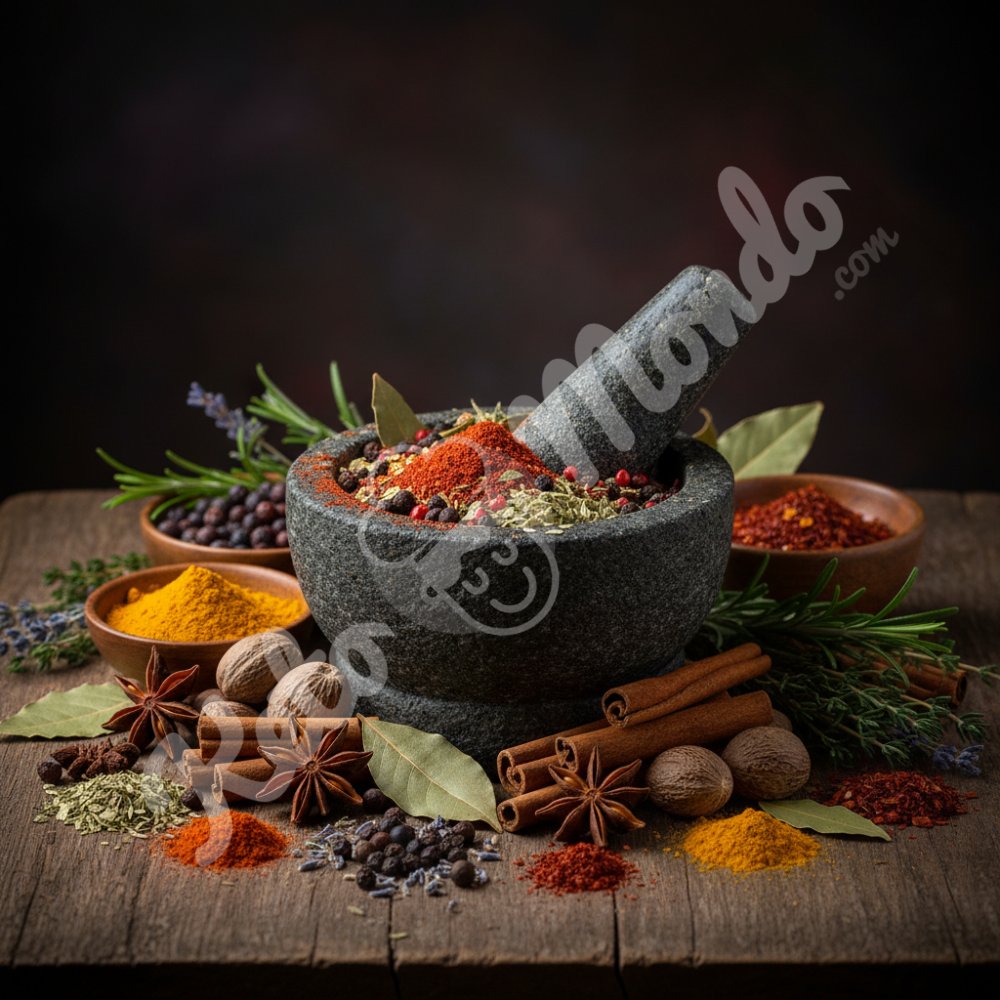
Building a sugar-free dish requires an understanding of flavor architecture. You don't just throw spices in a pot; we orchestrate them. It all starts with the foundation: basic spices like turmeric and cumin, which provide an earthy, stable note. Then come the heart spices, such as coriander and ginger, which create volume and texture in the mouth. Finally, we add the top notes, these final touches of green cardamom, mace or long pepper which bring brightness and complexity. This layered structure creates an experience that evolves as you taste it. Unlike sugar which saturates the receptors instantly, the aromatic complexity stimulates them in successive waves.
This persistence in the mouth is the key to sensory satiety. When a dish is rich in nuance, the palate stays engaged longer. We chew more slowly, we savor each bite, and the signal of satisfaction sent to the brain is much more powerful and lasting. This is what I call 'honest wealth'. She doesn't cheat with brain chemistry; it honors the complexity of our senses. By learning to appreciate the subtle bitterness of fenugreek, the woody spiciness of cloves or the resinous warmth of black cardamom, we escape the dictatorship of one taste. We rediscover that true indulgence lies in diversity and not in sweet uniformity.
The secret of deep satisfaction
Another pillar to eliminate the need for sugar is the search for umami, that fifth flavor that evokes fullness and savory. In Pakistani cuisine, umami comes not from artificial sources, but from the slow processing of ingredients. Caramelizing onions (no added sugar!), reducing tomatoes, cooking meats on the bone for longer, and using fats like ghee judiciously creates an incredibly satisfying umami base. When the palate encounters this depth, it instantly feels 'nourished'. The craving for sugar, which is often a desperate search for quick satisfaction, vanishes in the face of this solid taste reality.
Umami acts as a taste stabilizer. It rounds the corners, brings roundness and binds the spices together. It is the cement of our culinary architecture. By favoring techniques that maximize umami — like braising or using homemade collagen-rich broths — we create dishes that stand on their own. We no longer need to 'spice up' a sauce with a pinch of sugar or a dash of ketchup. The flavor is there, whole, vibrant and deeply reassuring. It's a form of comfort that doesn't betray our metabolism, but supports it by providing essential nutrients in a delicious form.
A path of freedom
You have to be honest: if you have been accustomed to a diet rich in hidden sugars, the transition to purely aromatic cuisine takes time to adapt. The palate must 'detoxify'. At first, flavors may seem less impactful because your receptors are saturated. But after a few weeks, a miracle happens: your sensitivity returns. You begin to sense the natural sweetness of a simmered onion, the floral scent of a coriander seed, the complexity of quality pepper. What seemed normal to you before — like a soda or an industrial dessert — suddenly becomes aggressive and disgusting. You have regained your freedom of taste.
This rehabilitation is the greatest gift you can give to your health. It allows you to escape the cycle of compulsive cravings. When you are no longer a slave to sugar, you regain control over your food choices. We no longer eat because we are 'driven' by an addiction, but because we enjoy food. Pakistani cuisine, with its endless palette of spices, is the perfect tool for this transition. It offers such intensity that it fills the void left by sugar. It transforms discipline into pleasure. It's an education that never ends, as each spice, each blend, each technique opens new doors to pure satisfaction.
Health as a symphony of flavors
Finally, it is crucial to understand that this choice is not just a matter of taste, it is a matter of metabolic survival. Sugar is the driving force behind inflammation and insulin resistance. By replacing it with spices, we not only improve the flavor of our dishes, we introduce powerful protective agents. Turmeric, cinnamon, ginger, cloves — all have documented antioxidant and anti-inflammatory properties. Our cuisine then becomes a symphony where each note contributes to the harmony of the whole. We eat for pleasure, and we heal by eating.
This is where the true wisdom of our ancestors lies. They didn't need complex nutritional theories to know that flavorful richness was the key to healthy living. They lived it every day, through gestures transmitted with love. By returning to this complexity, we honor their legacy while responding to the challenges of our times. We prove that sobriety in sugar is not a life of dullness, but an explosion of colors and perfumes. The true wealth is not in what we add to mask, but in what we reveal through patience and the art of spices. Welcome to a world where every bite is a discovery, and where satisfaction knows no limits.