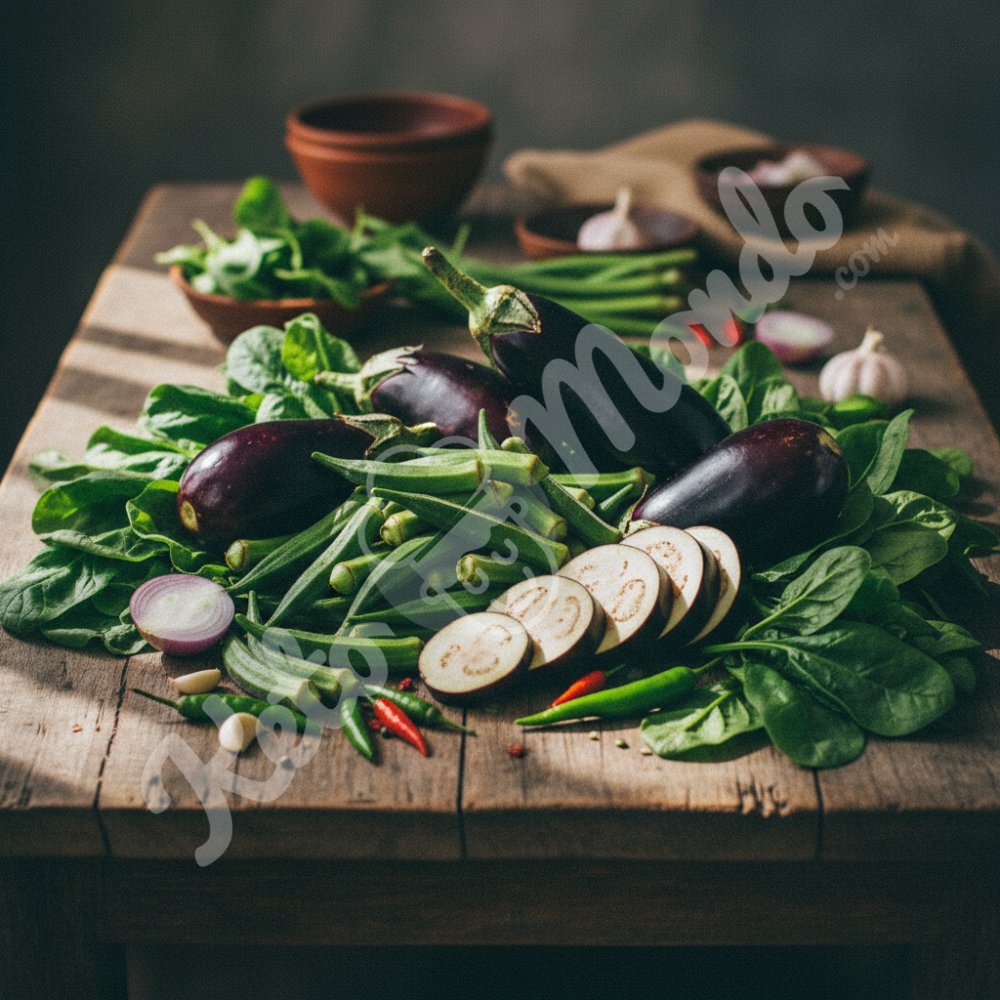

The plant as the real protagonist
In the collective imagination, Pakistani cuisine is often reduced to its grilled meats or its opulent stews. However, if you enter the everyday kitchen of a Pakistani family, you will discover a very different reality: the absolute reign of plants. For my mother and grandmother, vegetables were never 'sides' or decorative garnishes. They were the beating heart of the meal, the very substance that gave the dish its texture, volume and personality. Learning to cook was first of all learning to respect the cycle of the seasons and to understand the silent language of plants. This wisdom, which I rediscover today through the prism of low-carb eating, is absolutely relevant.
Non-starchy vegetables — like bindi (okra), spinach, bitter gourd or eggplant — are the pillars of lasting metabolic health. They offer what I call 'substance without the weight'. In a low-carbohydrate approach, they advantageously replace rice and bread by providing a complexity of textures that starch cannot match. A perfectly sautéed bindi dish, where each vegetable retains its crunch while being infused with spices, is a complete sensory experience. We don't just eat to nourish ourselves, we eat to connect to the earth, to absorb solar energy transformed into fibers and flavors. Plants are the ideal support for our spices, because they absorb their nuances without ever overpowering them.
Nutritional density and ancestral intelligence
What strikes me most about traditional cooking is the instinct with which our ancestors chose the most nutrient-dense foods. Without microscopes or laboratories, they knew that dark green leaves provided strength, bitter vegetables purified the blood, and light roots supported digestion. This nutrient density is the keystone of a successful ketogenic diet. When we remove empty calories from sugars and flours, we need to replace them with foods that 'talk' to our cells. Non-starchy vegetables are these messengers. They are full of minerals, vitamins and phytonutrients that act synergistically to optimize our metabolism.
Take the example of spinach, often prepared in 'Saag'. It is a concentrate of iron, magnesium and antioxidants. When cooked with ghee and spices, these nutrients become incredibly bioavailable. Fat helps with the absorption of fat-soluble vitamins, while spices stimulate digestive enzymes. It's a pharmacy on a plate. By favoring these plants, we give our body the tools necessary to burn fat effectively and keep inflammation low. Pakistani cuisine, in its purest form, is a celebration of this biological intelligence. It teaches us that satiety does not come from the quantity of glucose, but from the quality of the nutritional information we ingest.
Respect the essence
The way we treat a vegetable determines its impact on our health and pleasure. In my kitchen, there is no room for boiled and bland vegetables. Each plant deserves a specific technique to reveal its essence. Some require high, rapid heat to caramelize their natural sugars without destroying their fibers, like cauliflower or peppers. Others thrive on slow, gentle cooking, where they melt into an aromatic sauce, like eggplant. This respect for texture is crucial: it is what creates gastronomic interest and makes us forget the absence of starchy foods.
Seasoning also plays a catalytic role. A pinch of kalonji (nigella seeds) on zucchini, or a little dried fenugreek on spinach, radically changes the perception of the dish. The spices are not there to mask the taste of the vegetable, but to highlight the hidden notes. It's a constant dialogue. By learning to cook vegetables with this intention, we discover that they have an unsuspected richness. They cease to be a dietary obligation to become a source of pure pleasure. It is this mental transformation that makes a low-carb diet not only possible, but desirable in the long term.
Plant-based satiety and metabolic freedom
One of the biggest fears of low-carb beginners is never feeling 'full'. They are used to the feeling of heaviness in their stomachs that rice or bread gives. But there is another form of satiety, much more elegant and lasting: plant-based satiety. By consuming large portions of vegetables rich in fiber and water, combined with good fats, we activate the stomach's distention receptors while nourishing the intestinal microbiome. The result is a feeling of completeness that is not accompanied by any fatigue. We feel light, but firmly anchored.
This satiety is the key to metabolic freedom. It allows us to escape from the obsession with the next meal. When the body gets everything it needs in terms of micronutrients and fiber, it stops sending false hunger signals. We then rediscover the pleasure of eating by choice and not by compulsion. Vegetables become our allies in this quest for balance. They allow us to eat as much as we want, to enjoy generous and colorful dishes, while keeping our blood sugar levels perfectly stable. It's the best-kept secret of Pakistani cuisine: plant-based abundance is the shortest path to health.
The dance of the seasons
Finally, cooking with vegetables means agreeing to dance to the rhythm of the seasons. In Pakistan, the market changes its face every month. We impatiently await the arrival of the first peas, or the summer squash season. This natural rotation is not only a pleasure for the palate, it is a necessity for the body. Each season brings us exactly what we need: hydrating vegetables in summer, denser and more protective plants in winter. By following this cycle, we provide our body with a variety of nutrients that no supplementation can replace.
For me, this connection to seasonality is a form of culinary spirituality. It is recognizing that we are part of a whole, that our health is linked to that of the earth. By choosing local and seasonal vegetables, we honor this connection. We eat living, vibrant food, which carries the imprint of the terroir. It is this vitality that I seek to convey in each plate. A low-carb, plant-based cuisine is not a cuisine of restriction, it is a cuisine of celebration. It is the art of transforming the gifts of nature into an inexhaustible source of well-being and joy. Vegetables are our roots, and it is in them that we find the strength to flourish.