
From ego to essence
I began my career in the excitement of the 80s and 90s, a time when French cuisine sought to prove itself through complexity. At 20, I believed that my talent was measured by the number of ingredients on a plate and the technicality of my montages. It was a kitchen of ego, a constant performance designed to impress my peers and critics. I spent hours creating fragile architectures, ephemeral foams and improbable combinations of flavors. But looking back, I realize that this complexity was often just a mask to hide a lack of confidence. We do too much when we are not sure of the essentials.
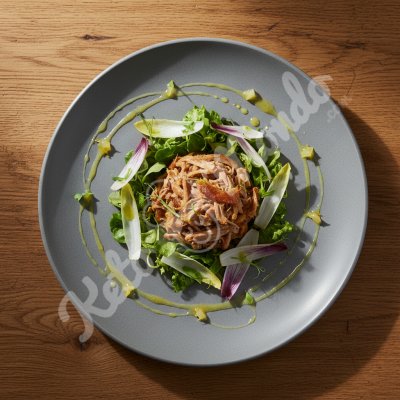
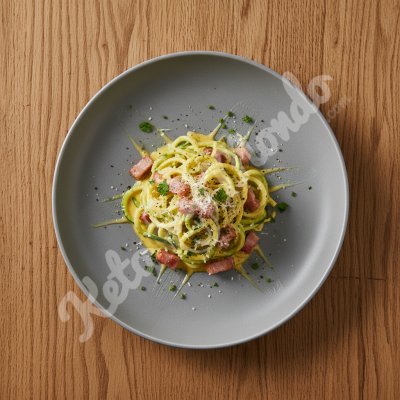
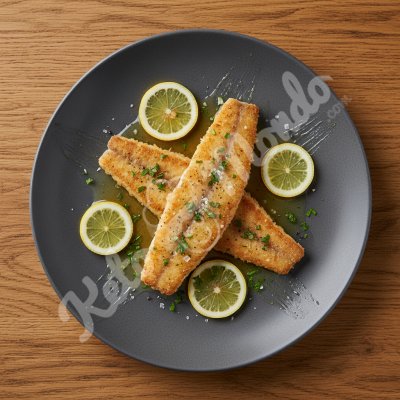
Today, at 46, my outlook has radically changed. Forty years behind the stove have taught me that true mastery lies in subtraction, not addition. This journey of clarification led me to a stripped-down kitchen, where each element must justify its presence by its intrinsic quality. It's a natural evolution: we start by wanting to say everything, and we end up saying only what is necessary. This purification is not a loss of creativity, it is its outcome. This is the moment when technique fades to give way to the pure emotion of the product.
The art of balance
Perfection is a static, almost cold notion. It suggests an unattainable ideal which freezes the gesture. Accuracy, on the other hand, is alive. It’s the perfect match between an ingredient, a moment and a need. Accuracy is knowing when a sauce has reached its ideal reduction, when a fish needs to come off the heat, when an extra grain of salt would transform the dish. It is a form of sensory wisdom that is not learned from books, but is forged through repetition and observation. In my current kitchen, I no longer seek for everything to be 'perfect' according to external standards; I try to make sure everything is 'fair' for the person who is going to eat.
This quest for accuracy particularly applies to my approach to low-carb eating. It is not about following a rigid dogma, but about finding the balance that sustains life. Accuracy means choosing the right fat for good cooking, it means respecting the seasonality of vegetables to extract the best nutrition. It is a perfection of intention. When a dish is just right, it provides immediate and deep satisfaction, a feeling of completeness that obsession with aesthetic detail can never replace. It is the luxury of truth.
The lesson of maturity
We don't cook at 46 the way we cooked at 20, because our own body teaches us other truths. With maturity, metabolism changes, tolerance for excess decreases, and the need for clarity becomes imperative. I learned to listen to my body's signals. He told me that sugar exhausted him, that flour weighed him down, and that noble fats were his real fuel. By changing my own diet, I discovered a vitality that I didn't even have at the dawn of my career. This personal experience has infused my professional practice.
Cooking for others now means taking care of their bodies as much as their pleasure. I know that digestive clarity is the greatest gift I can give to my guests. A meal that leaves you alert, light and serene is a successful meal. This awareness of the fragility and power of the human body is the fruit of age. It brings an ethical dimension to my work. I am no longer just a flavor creator; I am a balance keeper. My body is my first work tool, and the respect I have for it is reflected in every plate I serve.
Teach the essentials
I see young chefs arriving in my kitchen who are full of talent, but often lost in pure technicality. They want to use liquid nitrogen, complex gelling agents, unstructured textures. I look at them with tenderness, because I see myself in them. But my role is to bring them back to the earth, to the fire, to the product. I teach them that the greatest difficulty is not spherification, but cooking a prime rib to perfection or making a Dutch sauce without it cutting. I teach them patience and humility in the face of the material.
Transmitting the wisdom of accuracy means showing them that a simple plate, composed of three exceptional elements prepared with respect, is the summit of culinary art. It’s making them understand that the health of the person who eats is their ultimate responsibility. I want them to emerge from my learning not as technicians, but as conscious nurturers. Cooking is an act of love and service. The older we get, the more obvious this dimension becomes. The rest is just literature.
The final serenity
Looking back at how far we have come, I feel immense gratitude. For the burns, for the gunshots, for the encounters, for the failures that taught me more than my successes. Each step was necessary to arrive at this clarity today. Cooking gave me everything: a discipline, a passion, and ultimately, a deep understanding of life. Discovering that excellence and health are not enemies, but allies, was the most beautiful revelation of my maturity.
If I had a message for the young woman I was, it would be: 'Don't worry about not being perfect. Just try to be fair. Accuracy brings a peace that perfection ignores. It allows you to age in the kitchen with elegance and joy. Today, I no longer seek to conquer the world; I seek to honor the moment, the product and the human being. It is in this newfound simplicity that I find my greatest satisfaction. Cuisine has become for me a straight line, a path of truth where every gesture counts and where each flavor tells a story of respect and life.