
Beyond fufu and rice
I carry within me the scents of the markets of Accra and the excitement of the kitchens of London. My youth was lulled by the rhythm of the pestle crushing the cassava for the fufu and by the captivating smell of simmering jollof rice. In my culture, meal is more than just nutrition; it is an act of communion, a celebration of life. For a long time, I believed that this identity was inseparable from heavy starches. We couldn't imagine a stew without its mountain of rice or its dome of tuber paste. It was the immutable structure, the basis of our generosity. But as I became a chef, I began to ask myself a disturbing question: what if the soul of our cuisine resided not in starch, but in what accompanies it?
This reflection was born from a simple observation: after our big family meals, we were all overcome by immense fatigue. We called it 'satisfaction', but it was actually metabolic lethargy. As I analyzed my own recipes, I realized that the real treasures—the roasted spices, fresh herbs, long-braised meats, and carotene-laden red oils—were often drowned in a mass of flavorless carbs. Starch served as a support, an economical 'filler'. By deciding to reduce and then eliminate these starchy foods, I did not betray my heritage; I freed him. I allowed the flavors to sing without being drowned out by the weight of the grain.
The triumph of plants and proteins
The challenge was significant: how to maintain this feeling of fullness without rice or yam? The answer came from leafy vegetables, so present in our gastronomy but often relegated to the background. Kontomire (taro leaves), spinach, kale... these vegetables, when cooked with the same intensity as our stews, become extraordinary foundations. I started serving my peanut sauces or goat's cheese stews on beds of crunchy vegetables or spiced cauliflower purees. The reaction from my customers was immediate: they rediscovered the complexity of my sauces. Without the starch to dilute the flavor, each spice took its place.
This change in structure has transformed the meal experience. Instead of feeling 'filled', we feel 'nourished'. The satiety provided by quality proteins and natural fats is incredibly clear. We leave the table with vibrant energy, ready to face the rest of the day. It is a form of respect towards the guest: offering them the best of our terroir without imposing the burden of laborious digestion. Modern Ghanaian cuisine, as I see it, is a cuisine of movement, not stagnation.
Innovation serving taste
Throughout West Africa, we have this tradition of 'swallow' — these dense pastes that we swallow without chewing to accompany soups. This is the most difficult element to replace in a low-carb approach. But this is also where creativity is best expressed. I experimented with alternatives based on mixed cabbage and almond flour, or vegetable fibers bound with a little natural gelatin. The result is stunning: we find this elastic and comforting texture, this ancestral gesture of dipping the dough in the sauce, but without the devastating glycemic impact. It is a technical victory which allows us to keep the ritual while changing the biology.
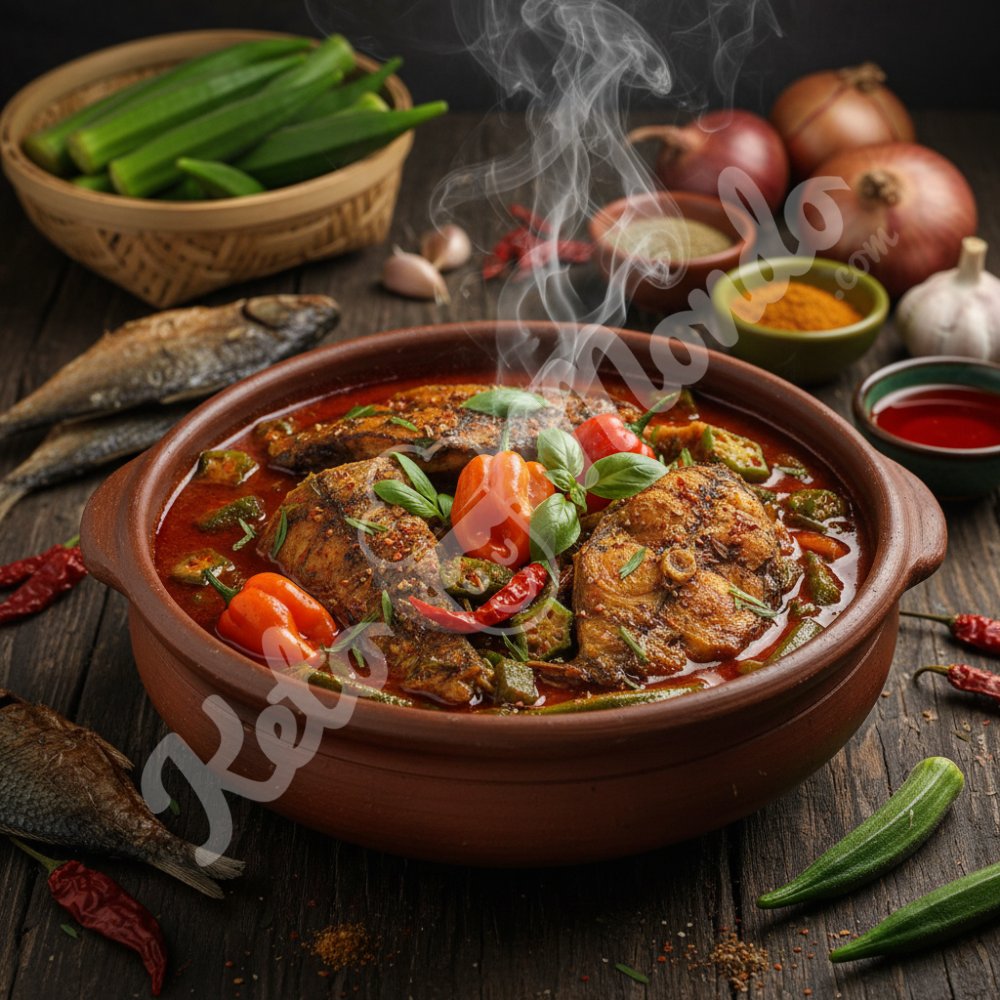
This innovation is crucial for transmission. If we want our traditions to survive in a world where metabolic diseases are wreaking havoc, we must be able to adapt them. Showing the younger generation that you can eat an authentic 'Okra Stew' with a cauliflower swallow gives them the tools to stay healthy while remaining proud of their roots. Tradition is not a stone prison, it is a river that must continue to flow, even if it means changing bed.
Aromatic purity
Our sauces are naturally rich and complex. The mixture of fresh ginger, garlic, red onions and scotch bonnet pepper creates an aromatic base of rare power. In my kitchen, I let these ingredients express themselves fully. I preserve the onions until they reveal their natural sweetness, without ever adding sugar. I use fresh, sun-kissed tomatoes and freshly roasted spices. This purity requirement makes the addition of starch completely unnecessary. The sauce is sufficient in itself; she is the dish.
The use of fats is also central. Red palm oil, rich in antioxidants, or artisanal shea butter provide unique creaminess and depth of taste. In a ketogenic setting, these fats are our allies. They carry aromas and ensure lasting satiety. By returning to these traditional fats, often neglected in favor of refined vegetable oils, we find not only the authentic taste of Africa, but also remarkable energy stability. It is a cuisine of truth, where each ingredient has a precise function.
A new definition
I am often asked if reducing starch portions is not contrary to African hospitality. My answer is categorical: no. True generosity is offering what is most precious. Serving premium meat, fresh fish daily, or carefully grown vegetables is a far greater act of love than filling a plate with cheap rice. Hospitality means ensuring the well-being of your guest, not only during the meal, but also in the hours that follow. Giving him light digestion and clarity of mind is the greatest gift.
My table remains a table of abundance. There are always multiple dishes, vibrant colors, scents filling the room. But it's an abundance of nutrients, flavors and life. Rethinking starchy dishes, I discovered that Ghanaian cuisine has infinite adaptability. She is resilient, joyful and deeply healthy. I am proud to carry this message: we can honor our ancestors while taking care of our future. The soul of Africa is not in the grain, it is in the fire, in the spice and in the heart of the person who cooks.