
Sauce as identity
In Ghanaian cuisine, and more broadly in West Africa, sauce is not a simple accompaniment. It is the beating heart of the meal, the element that defines its character, its history and its generosity. We don't say 'I'm going to eat rice', we say 'I'm going to eat peanut sauce' or 'palm sauce'. The rice or fufu are only vehicles, neutral supports intended to transport the sauce to the palate. As a chef, I realized that to adapt my cooking to a low-carb lifestyle, it was not necessary to change the sauce, but to change its role. By making the sauce the absolute star of the plate, we rediscover an aromatic complexity that we tended to dilute in starch.
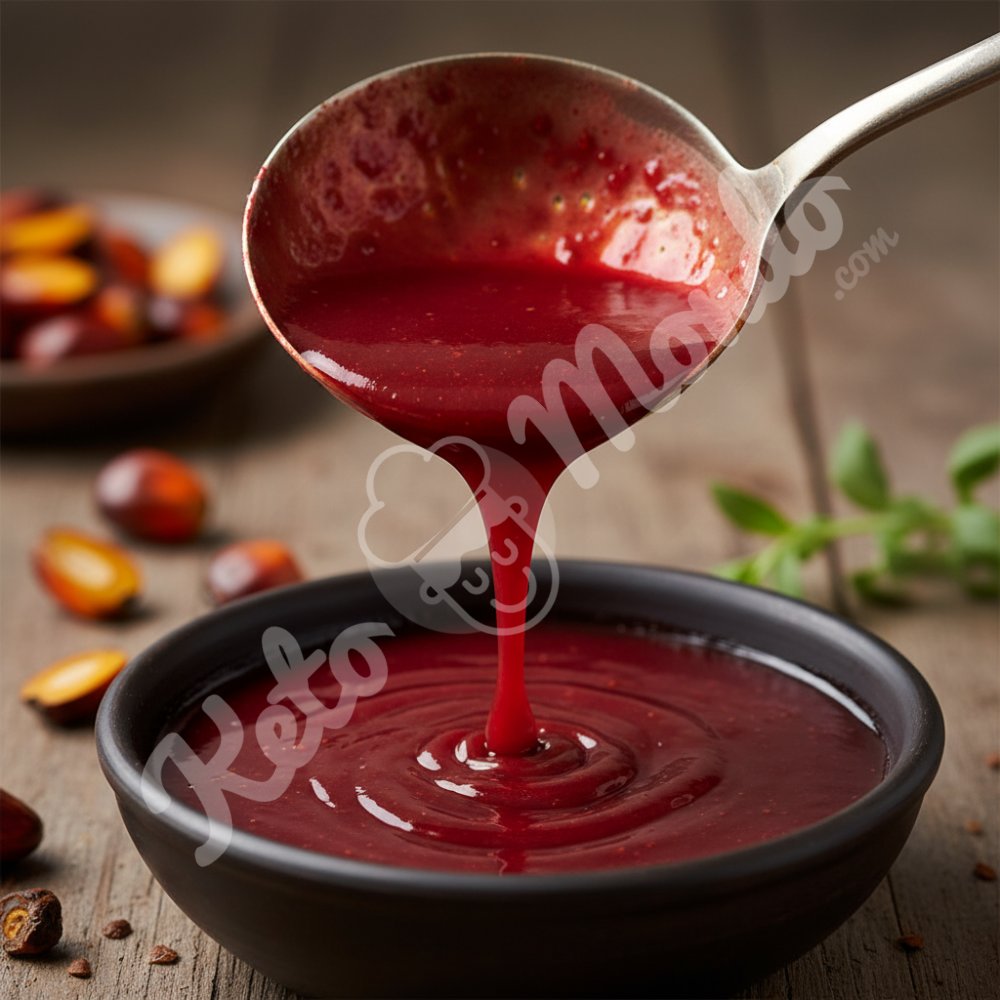
A well-made sauce is a work of patience. It is a process of stratification where each ingredient brings its own note. We start with the base – ginger, garlic, red onions and chili peppers – which we sauté for a long time to extract the essence. Then come the tomatoes, the spices, and finally the binding element, whether it is mixed melon seeds (Egusi), peanut paste or palm nut pulp. It's not a cuisine of the moment, it's a cuisine of depth. And this depth is so satisfying that it makes going without starchy foods completely painless. We no longer seek to fill ourselves, we seek to delight.
African umami
One of the great strengths of our sauces lies in the use of traditional fermented ingredients such as Iru (fermented néré seeds) or Dawadawa. These condiments bring an extraordinary 'umami' dimension, an earthy and savory depth that is the perfect alternative to sugar. Sugar, in modern cooking, is often used to create artificial satisfaction. In my cooking, I prefer the real satisfaction of fermentation. Iru brings notes of mature cheese and undergrowth which enhance the taste of meat or fish. It’s a complexity that engages the palate and sends powerful satiety signals to the brain.
This complexity is reinforced by the play of contrasts. The natural acidity of fresh tomatoes balances the richness of the fats, while the heat of the scotch bonnet pepper stimulates the senses without saturating them. In a peanut sauce, for example, the sweetness comes from roasting the nuts, not from adding sugar. By letting the ingredients express themselves fully, we create a harmony that is sufficient in itself. We don't need rice to 'calm' the fire or to 'mop up' the fat; we learn to appreciate the intensity of each bite. It is an education of taste that brings us back to the essentials.
Nutrient density
Our sauces have often been criticized for their richness, deeming them too fatty or too heavy. But in a ketogenic setting, this richness becomes a virtue. The fats we use — unrefined red palm oil, rich in vitamins A and E, or fats from oilseeds — are exceptional fuels. They carry flavors and provide stable energy throughout the day. Serving a generous ladle of Egusi sauce on a bed of fresh spinach is a concentrate of nutrients, proteins and good lipids. It’s a generosity that respects the body.
The heavy feeling that we once associated with these dishes came not from the sauce, but from the fat-starch combination. Removing starch removes inflammation and bloating. We keep the pleasure of creaminess, the heat of spices and lasting satiety, but we gain incredible digestive lightness. It's a revelation for many of my clients: they discover that they can eat 'African' and feel light, alert and efficient. The sauce then becomes a health tool, a vector of well-being that honors our culture without compromising our future.
Ancient techniques and modern structure
To obtain a perfect structure without flour or starches, I rely on ancestral techniques. Egusi, for example, is a fantastic natural thickener. These melon seeds, once mixed and added to the sauce, create small lumps rich in protein which give chewiness and consistency. Likewise, slow reduction makes it possible to link the elements together by the simple concentration of the juices. You don't need 'roux' or cornstarch when you have time and good ingredients. It is a cuisine of respect: respect for the product, respect for the cooking time, respect for the person eating.
This approach requires relearning certain gestures. We no longer 'sauce' with a piece of bread or a ball of fufu; we use leafy vegetables like natural spoons, or we simply taste with a spoon so as not to lose any of the aromatic nuances. This change in ritual modifies our perception of the meal. We eat more slowly, we savor more. The sauce is no longer an accessory, it is the very structure of the meal. It carries within itself all the complexity of our land and all the wisdom of our ancestors. By placing it at the center, we give it back its dignity.
A new aesthetic
Reorganizing the meal around the sauce also means changing our culinary aesthetic. My plates are now landscapes of color and texture: the deep green of spinach, the vibrant red of palm oil, the gold of roasted peanuts. It's visual, appetizing cuisine that doesn't look like a 'diet'. It's a celebration. By showing that Ghanaian cuisine can be elegant, modern and healthy without losing its soul, I want to inspire the new generation to reclaim their heritage.
The soul of our cuisine is not in the bag of rice, it is in the mortar where we crush the spices, in the pot where the flavors merge, and in sharing around a generous dish. By freeing our sauces from the tyranny of starch, we unlock their true potential. They become bridges between the past and the future, between tradition and science. It’s a happy, tasty and deeply nourishing combination. The sauce is our strength, our structure and our joy. And she never needed sugar to shine.