
The ritual of sharing
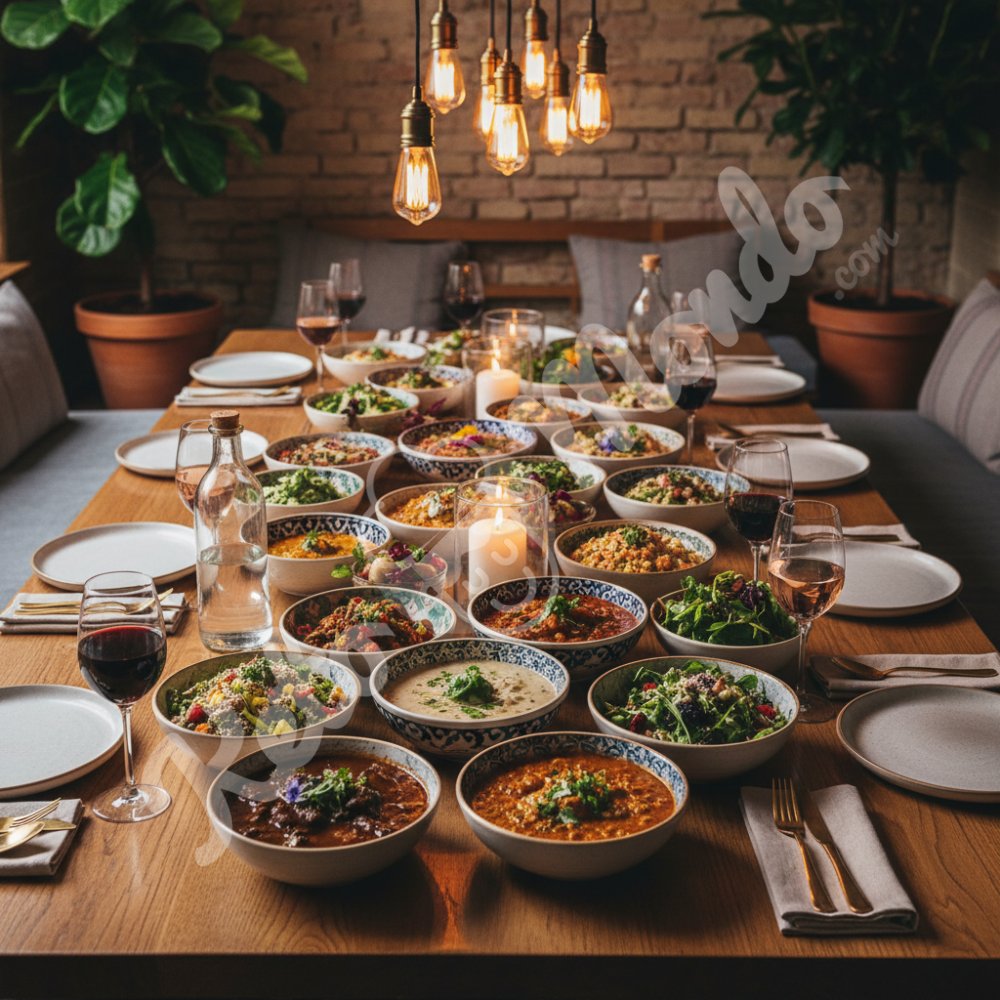
In Africa, the table is not just a piece of furniture where plates are placed; it is the beating heart of social life, the place where families bond and friendships are forged. We have this magnificent tradition of the common dish, where everyone eats with respect and conviviality. It’s a moment of absolute sharing. But this sharing was often associated with excessive consumption of starchy foods, because rice or fufu served as a base to 'stretch' the meal and feed the greatest number. In my low-carb approach, I do not seek to break this ritual, but to purify it. I want sharing to remain at the center, but to become a vector of health rather than a metabolic burden.
Sharing without excess means relearning to savor the essentials. Instead of a mountain of white rice, I offer a multitude of small dishes: leafy vegetable stews, grilled fish, braised meats with spices. The gesture of picking together remains, but what we put in our mouth is dense, nutritious and vibrant. This new way of sharing requires an education of vision. We must accept that abundance is not measured by volume, but by diversity and quality. This is a profound cultural transition, but it is necessary to preserve the vitality of our communities.
The elegance of variety
African hospitality, what we call 'Akwaaba' in Ghana, is a sacred value. You can't entertain someone without offering them something to eat. But generosity should not be synonymous with glycemic overload. I show my family and friends that you can be extremely generous by offering exceptional products. Serving premium lamb, marinated for 24 hours in a blend of Yaji and palm oil, is a much greater act of respect than serving a dish of industrial rice. Abundance is found in the care taken in preparation, in the search for the perfect balance between spices, and in the freshness of the products.
This 'measured abundance' allows you to rediscover the pleasure of tasting. We no longer eat to fill our bellies as quickly as possible; we eat to explore flavors. We discuss the texture of okra, the heat of a pepper, the sweetness of a preserved onion. The meal becomes a dialogue. By multiplying the sources of protein and good lipids, we ensure lasting satiety which does not require 'filling' with starch. It's a form of accessible luxury: that of eating less, but infinitely better. This is how I see the modern African table: a table for conscious gourmets.
In the end, there is a post-prandial 'coma'
We all know this feeling after a big traditional festive meal: a heavy lethargy, an irresistible desire to sleep, a foggy mind. This is the famous 'carb coma'. In our celebrations, this often means that the party stops right after the meal. By offering a low-carb alternative, I restore energy to our gatherings. People leave the table alert, happy and ready to dance or chat for hours. Usability becomes 'clear'. We are fully present to others, without the barrier of digestive fatigue.
This clarity changes the dynamics of exchanges. The conversations are more lively, the laughter more frank. We no longer endure our meal, we celebrate it. It's an invaluable gift that we give to our guests: allowing them to enjoy the party until the end. I have seen seniors regain a vitality that they thought was lost, simply by changing the composition of their plate during our family gatherings. This is proof that food is our first medicine. Sharing a healthy meal means sharing life in a bar.
Respect the ingredient
Our grandmothers had an innate wisdom: we don't waste food. But this wisdom has been misused by the idea that you have to 'finish your plate' even if you are no longer hungry. In my cooking, I advocate respecting the ingredient through the right measure. Eat less meat, but better quality meat. Eat more vegetables, but seasonal vegetables. It is a form of humility in the face of what the earth offers us. By reducing massive amounts of starch, we also reduce food waste, because we are more conscious of what we consume.
This approach requires relearning how to listen to your body in the middle of the group. Just because the dish is common doesn't mean you should eat it without thinking. We learn to serve ourselves with discernment, to appreciate each bite. It is an education in taste that benefits the entire community. By valuing quality over quantity, we also value the work of those who produce our food. The table becomes a place of mutual respect: respect for the cook, respect for the producer and respect for one's own metabolism.
Be a health ambassador
As a leader, I feel invested with a mission of transmission. I don't just want to serve good food; I want to show a path to sustainable health for my community. Explaining to my aunts why I don't serve jollof rice at every meal takes diplomacy and a lot of love. I don't do it out of dogmatism, but because I want to see them in good health for as long as possible. I show them my own results: my energy, my skin, my stable weight. Results are the best argument.
Little by little, mentalities are changing. People are starting to ask me for my 'cauliflower rice' recipes or my secrets for starchy leafy stews. It's a silent victory. Sharing healthily means sharing intelligently. It's saying to those you love: 'I value you enough to prepare something that really nourishes you, without making you sick'. It is a new form of generosity, deeper and more lasting. African cuisine has everything to gain from this development. She keeps her soul, her warmth and her sense of sharing, but she adds a dimension of care and respect for life which will make it eternal.