
The forge of gesture
I spent my early formative years in the kitchens of Kyoto, under masters who spoke only out of absolute necessity. In this environment, the silence was not a void, but a fullness. It was the space needed for the gesture to become perfect. I was taught that idle speech is a distraction, and a distraction is a mistake. This rigor applied to everything: the way of holding the knife, the temperature of the water, the arrangement of a shiso leaf. Each movement had to have a reason for being, a precise function in the economy of the dish.
Through this discipline, I understood a fundamental truth: precision is not a maniacal obsession with detail, it is a quest for efficiency. In cooking, as in life, efficiency means obtaining the maximum result with the minimum amount of resources. And this efficiency naturally leads to a low-carb diet. For what ? Because unnecessary carbs — the added sugars, the filler flours, the taste-masking starches — are the 'waste words' of nutrition. They clutter the metabolism without providing any real added value to sensory experience or health.
The economy of the soul and the body
In Japan, we have the concept of 'Mottainai', which expresses regret over waste. We don't waste an ingredient, we don't waste a resource, we don't waste our time. In traditional cooking, we use every part of a vegetable, every bone of a fish for a broth. This philosophy of moderation and respect also applies to our own body. Consuming excess carbohydrates is an act of metabolic waste. It's forcing the body to process energy it doesn't need, to store what should be used, to exhaust itself in unnecessary insulin management.
When we limit ourselves to what is strictly necessary to nourish the cells and satisfy the palate, sugars and starchy foods disappear by themselves. What remains is the essentials: the noble proteins, the healthy fats which carry the flavors, and the fibers of seasonal vegetables. It is a form of economy of the soul. Removing the excess frees up space for clarity. A precise meal doesn't leave you feeling heavy or foggy; it leaves you alert, light and ready for the rest of the day. This is the reward of sobriety.
Clarity through subtraction
Modern cuisine tends to accumulate layers: complex sauces, multiple garnishes, mixtures of textures. It’s an additive approach. Japanese cuisine, on the contrary, is subtractive. We remove everything that is not the ingredient itself. It's simple math: the fewer variables there are on a plate, the purer the taste of each item. And the fewer variables there are, the less chance there is of introducing hidden carbs. Sugar is often used to hide an imperfection or to create an artificial addiction. By aiming for perfection in the raw ingredient, we eliminate the need for sugar.
Applying this Japanese precision to a low-carb diet is obvious. When you remove the rice, bread or noodles, you do not create a vacuum; we reveal the structure. We discover that the fat of a grilled salmon or the crunch of a daikon radish are sufficient in themselves. This clarity through subtraction is a relief to the pancreas and the mind. We stop fighting against blood sugar peaks and enter into serene stability. This is the mathematics of inner peace.
The aesthetics of truth
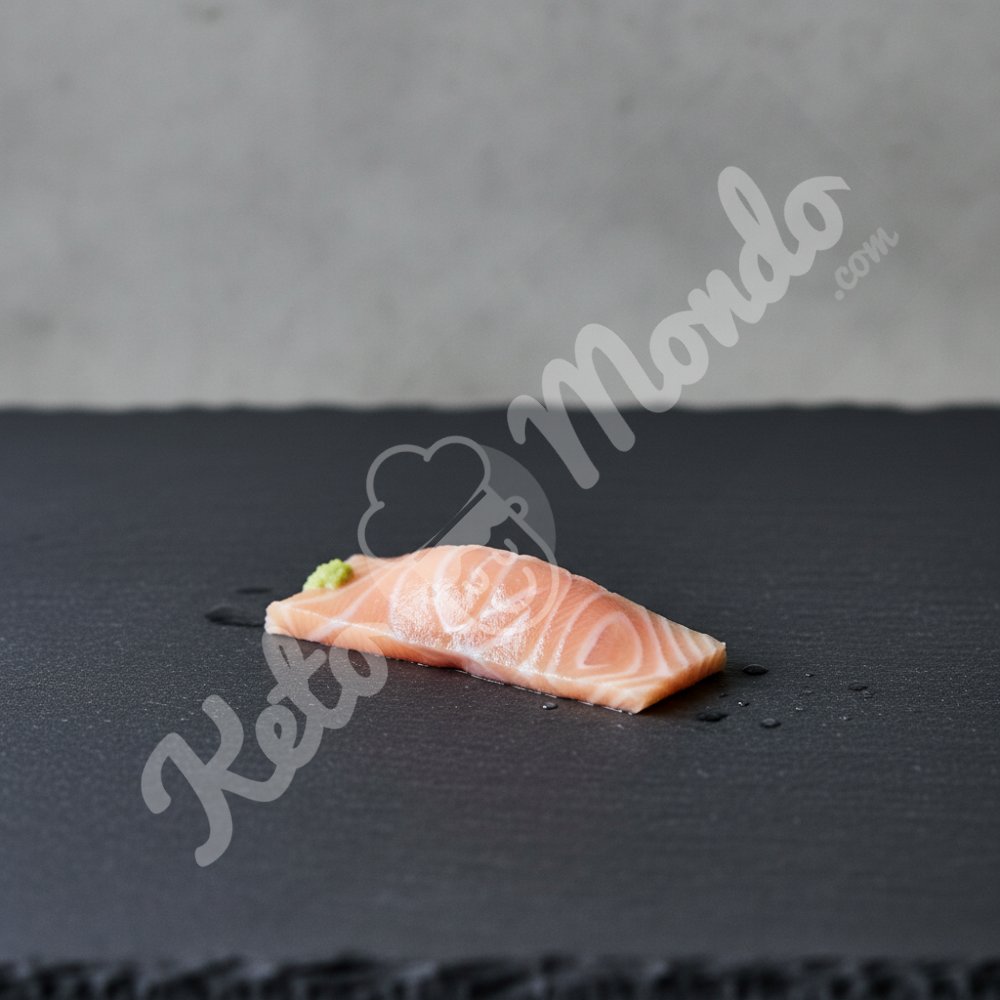
Precision means respecting each ingredient for what it is. If I'm making sashimi, I don't want the fish to be spoiled by a sugary marinade. I want to feel the sea, the texture of the flesh, the freshness of the moment. This respect naturally leads us towards the foods that are most nutritionally dense and lowest in carbohydrates. Nature's best ingredients—oily fish, eggs, seaweed, mushrooms, green vegetables—don't need carbs to shine. They carry within them their own truth.
In my kitchen, I seek to preserve this truth. Steam, rapid grilling, natural fermentation are techniques that honor the ingredient without weighing it down. By avoiding breading, glazes and sauces thickened with flour, we remain within an aesthetic of truth. It’s an approach that requires humility: the leader gives way to nature. And this humility is the key to lasting health. We no longer seek to dominate nature through chemical transformations, we align ourselves with it.
The sword and the plate
Precision is above all a mental discipline. It is the ability to say 'no' to what is easy, to what is tempting, to what is superfluous. In samurai culture, the sword is an extension of the spirit; in the kitchen, the knife and the plate are too. Choosing a low-carbohydrate diet in a world that bombards us with sugar requires a certain strength of character. It is a form of active meditation. Each food choice is an opportunity to exercise your will and reaffirm your values.
This discipline is not a punishment, it is a liberation. It frees us from sugar addiction, chronic fatigue and mental confusion. By being precise in our choices, we become the masters of our own biology. We no longer suffer from the whims of our insulin; we direct our energy towards what really matters. This is the path to self-mastery. Precision reduces carbs, but it increases freedom.
Towards metabolic Shibui
In Japan, we appreciate 'Shibui', a refined, sober and unadorned beauty. It is the elegance of what has been refined down to the essentials. I believe that our health should tend towards this metabolic Shibui. A body that functions precisely, without the clutter of unnecessary carbohydrates, possesses a quiet beauty and strength. It is a state of balance where each cell fulfills its function efficiently, where the mind is clear like water from a mountain spring.
My message is simple: seek precision in your cooking and in your life. Don't just eat; nourish yourself with intention. Remove the excess, honor the ingredient, and respect your own biology. By demonstrating accuracy and sobriety, you will discover that health is not a distant goal, but a daily reality that is built gesture by gesture, bite by bite. The path of precision is the path of life.