
Le concept de Shun
In Japan, we don't just eat what's available; we celebrate 'Shun'. Shun is that precise, often fleeting moment when an ingredient reaches the peak of its flavor, texture and nutritional value. This is the moment when nature offers us its quintessence. Breathing with the seasons means accepting that our diet is not a monotonous straight line, but a living cycle. Spring brings us the bitterness of young shoots to wake our body from its winter torpor. Summer gives us water and minerals from cucumbers and eggplants to cool us down. Autumn prepares us for the cold with the richness of mushrooms and fatty fish. Winter anchors us with the depth of roots and warm broths.
This natural breathing is not only a poetic tradition; it is a biological necessity. Our metabolism is not the same in July as in January. In winter, our body naturally requires more fats and proteins to maintain its internal temperature. In summer, he seeks lightness and hydration. By following the rhythm of the seasons, we provide our body with exactly what it needs when it needs it. It is a form of intuitive intelligence that prevents us from forcing our system with foods that are not in phase with our immediate environment.
The force of constraint
Modernity has accustomed us to the illusion of permanent abundance. We can eat strawberries in December and squash in June. But this lack of limits has a price: the loss of intention. When everything is available all the time, we eat without thinking, driven by artificial desires. On the contrary, seasonality imposes a natural measure. If you only eat what's grown locally and in season, your options are limited. And this limitation is a blessing for your metabolic health. It stops you from overloading your body with sugars and carbs that shouldn't be there.
In a cuisine guided by the seasons, heavy starches and refined sugars lose their central place. We are not trying to compensate for the lack of flavor of a winter tomato with sugar or fatty sauces; we simply wait for summer to enjoy the perfect tomato. This discipline of waiting strengthens our will and refines our palate. We learn to appreciate the subtlety of a winter radish or the delicacy of spring asparagus. Seasonal constraints create clarity of intention: we cook with what the land gives us, with respect and parsimony.
The aesthetics of the present moment
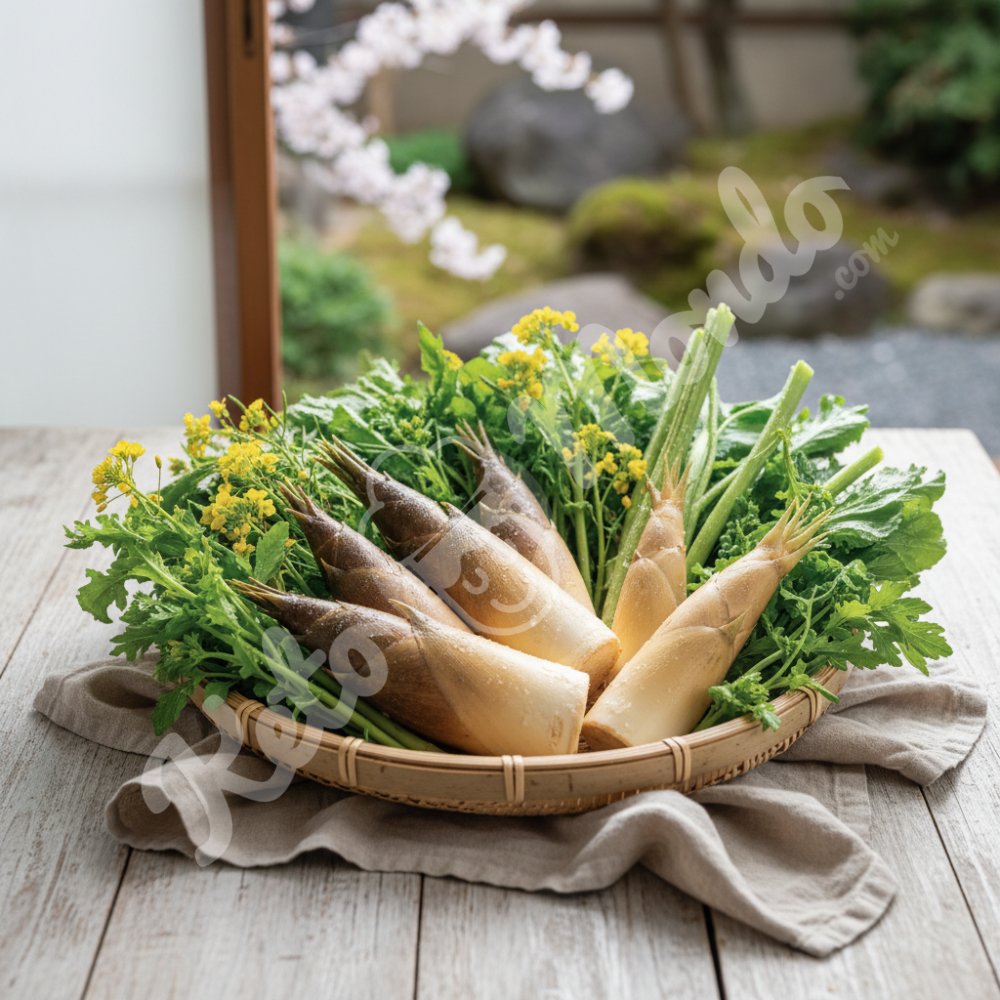
There is a deep dignity in accepting the impermanence of things. The fact that an ingredient is only available for a few weeks makes it invaluable. This creates special attention during its preparation and consumption. You don't eat a spring bamboo bud like you eat an industrial product; we eat it with the awareness that it is an ephemeral gift from nature. This aesthetic of the present moment, which we call 'Wabi-Sabi', distances us from compulsive consumption.
This attention to temporality results in a natural reduction in portions. There is no need to eat in large quantities when each mouthful is full of meaning and flavor. Respect for the seasonal ingredient leads us to a form of elegant sobriety. We prefer a small quantity of an exceptional product to a mountain of mediocre food. This is how seasonality becomes a tool for metabolic regulation: it teaches us the right measure through the appreciation of quality.
The pharmacopoeia of nature
Nature is the greatest pharmacist. What it offers us each season is precisely what helps our body adapt to climatic conditions. Bitter spring vegetables, such as fukinoto or fern shoots, stimulate the liver and help eliminate toxins accumulated during the winter. Summer cucumbers and melons, rich in water and potassium, prevent dehydration and heat exhaustion. Winter roots, dense and earthy, give us the stability and comfort we need to face the cold.
By aligning our diet with these cycles, we make the work of our digestive system easier. The body recognizes these foods and knows how to process them effectively. A seasonal low-carb diet is therefore doubly effective: it stabilizes blood sugar levels while supporting the body's natural detoxification and thermal regulation functions. This is ancient wisdom that has never needed graphs or statistics to prove its effectiveness. The body immediately feels it with a boost of energy and a feeling of lightness.
The antidote to excess
Eating seasonally cultivates constant gratitude. Each meal becomes an opportunity to thank the earth for its renewed generosity. This gratitude is the best remedy against excess and uncontrolled gluttony. When we are truly grateful for what we have on our plate, we do not feel the need to seek illusory satisfaction in processed or overly sugary foods. We are overwhelmed by the beauty and accuracy of what is present.
In Japan, we start every meal with 'Itadakimasu', an expression which means 'I humbly receive'. It is a recognition of the sacrifice of life (animal or plant) and the work of those who prepared the meal. This mental attitude changes everything. It slows down the pace of consumption, promotes chewing and allows satiety signals to reach the brain. Gratitude makes us aware of our real needs. It teaches us that true abundance lies not in quantity, but in the quality of our connection with what nourishes us.
The harmony of the macrocosm and the microcosm
Living in harmony with the seasons means aligning our microcosm (our body) with the macrocosm (nature). It is finding our place in the great cycle of life. By accepting the measure imposed by the seasons, we find robust health and a serene mind. A low-carbohydrate diet is not an artificial constraint; it's a return to original simplicity, where flavor and health become one.
I encourage you to look out your window, visit your local markets, and listen to what the season has to tell you. Let yourself be guided by the colors and scents of the moment. Do not seek to dominate nature, but learn to dance with it. In this dance, you will find the right measure, stable energy and inner peace. The season is your wisest guide; trust it, and your body will thank you.