
The belly as a mirror of the landscape
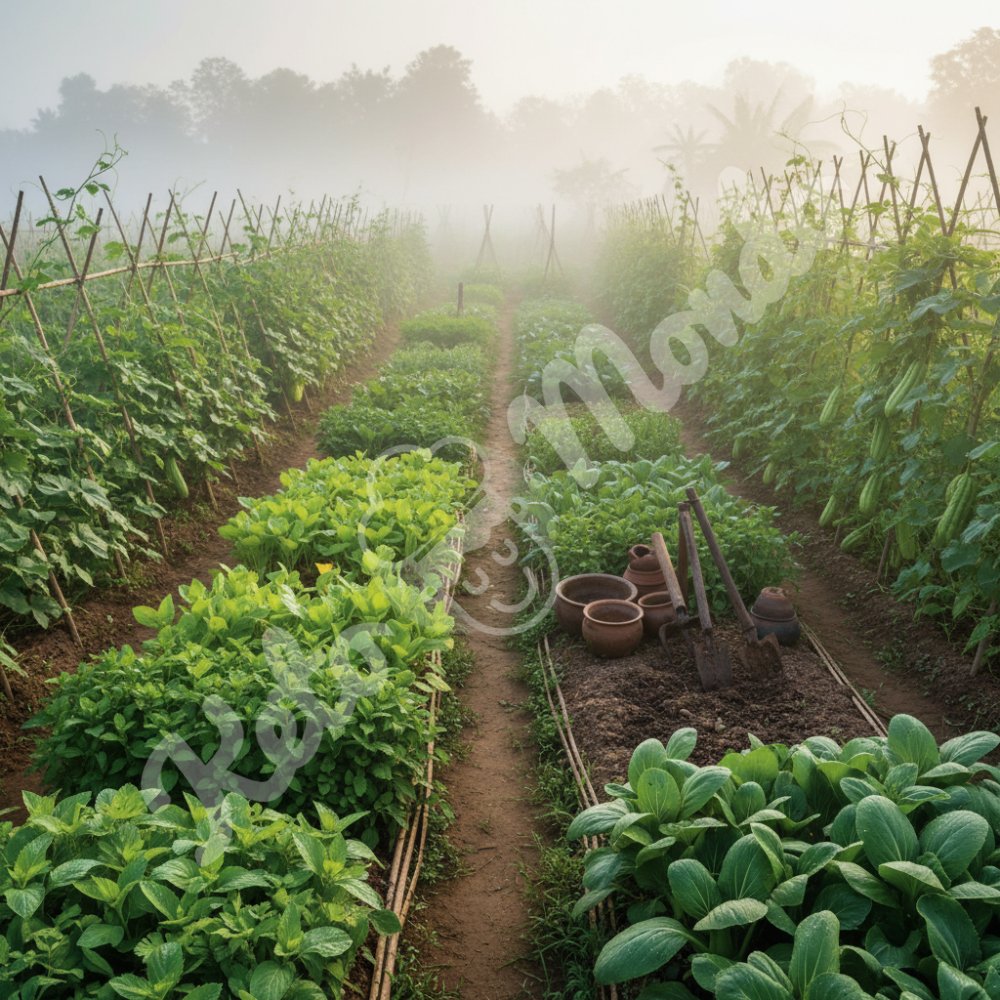
There is a profound biological truth that we tend to forget in our globalized world: our digestive system is not a universal, interchangeable machine. It is a living ecosystem that has been shaped, over millennia, in direct response to a specific environment. A body that grew up in the humid deltas of Vietnam, nourished by the products of this land and these waters, develops a unique digestive intelligence. Its microbiome, its enzymes, its absorption capacity are the exact mirror of the landscape that surrounds it. The belly is, literally, an extension of the earth.
This adaptation is not only cultural, it is genetic. Our ancestors survived by extracting as many nutrients as possible from what was locally available. As a result, our body instantly 'recognizes' molecules from our region. When presented with a local ingredient, he knows exactly how to break it down, how to neutralize any anti-nutrients and how to optimize its benefits. It’s a fluid, frictionless conversation between food and body. Eating local means speaking the mother tongue of your own belly.
The local pharmacy
Nature does nothing by chance. Plants that grow in a given region often contain the compounds necessary to help digest the proteins and fats typical of that same region. In Vietnam, the omnipresence of ginger, turmeric, galangal and a multitude of carminative herbs is not just a question of taste. These ingredients are natural aids to our digestion. They stimulate bile secretion, soothe intestinal inflammation and facilitate transit. They form a local pharmacy, perfectly calibrated to accompany our traditional diet.
Take the example of bitter herbs that we consume in large quantities. They prepare the stomach to receive animal proteins, ensuring efficient breakdown without excessive fermentation. This synergy between the local plant and the local protein is the secret to effortless digestion. By respecting this territorial coupling, we avoid overloading our system with inconsistent food combinations. The territory offers us not only food, but also the instructions for transforming it into pure energy.
When the body becomes exhausted
The massive introduction of exotic foods into our modern diet has a hidden metabolic cost. When we eat products that come from the other side of the world, that have been grown in different soils and in foreign climates, our digestive system has to make an extra effort. He must decipher biological signals that he does not know, process complex proteins that he is not used to and manage chemical residues linked to transport and conservation. It is an invisible source of stress that ultimately exhausts our regenerative abilities.
Many of the food sensitivities and chronic inflammations we see today are the result of this geographic disconnect. The body feels 'attacked' by substances that it cannot integrate harmoniously. By returning to a territory-centered diet, we radically reduce this inflammatory background noise. We allow our immune system to rest, because it no longer has to stand guard against food intruders. Local simplicity is the ultimate cure for the metabolic confusion of our time.
The rhythm of the earth
The territory is also expressed through time, that is to say the seasons. Eating local necessarily implies eating seasonally. This alternation is crucial for maintaining homeostasis, the body's internal balance. In summer, the earth offers us plants full of water and refreshing minerals, which help regulate body temperature and thin the blood. In winter, it gives us denser roots and richer nutrients that support internal heat production. It is a natural regulatory cycle that we ignore at our peril.
When we eat tomatoes in winter or heavy roots in the height of summer, we send mixed signals to our metabolism. We create a gap between our external environment and our internal state. This divorce from the rhythm of the earth is one of the major causes of chronic fatigue and hormonal imbalance. Respecting local seasonality means synchronizing with the forces of nature. It means accepting that our body is part of a larger whole, and that its health depends on its ability to vibrate in unison with its environment.
Anchoring by the plate
There is a deep stability that emanates from a body nourished by its own earth. It’s a feeling of anchoring, of biological security. We no longer feel like a tourist in our own body, but like a legitimate inhabitant. Digestion becomes predictable, energy becomes constant, and the mind calms. This inner peace begins in the gut. A digestive system that is not in constant struggle is a system that can devote itself to nobler tasks: reflection, creation, spiritual connection.
This anchoring by the plate is particularly important in our unstable world. Knowing that you can count on the resources of your territory to maintain good health is a form of individual sovereignty. It’s taking back power over your own biology. By choosing local, we choose resilience. We build a body capable of resisting external aggression because it is firmly rooted in its own geographical reality. This is the most ancient wisdom, and it is more relevant than ever.
Nourishing your essence through the earth
Ultimately, the earth creates us, and we are made of the earth we eat. To ignore this link is to amputate part of our vitality. Vietnamese cuisine, through its visceral attachment to the land, shows us the path to integral health. It reminds us that digestion is not an isolated act, but a communion with our environment.
I invite you to look around you. What grows near you? What herbs, vegetables and protein sources define your territory? By making these elements the heart of your diet, you are not only making an ecological or ethical choice. You are making a radical biological choice for your own well-being. Find your way back to your land, and your belly will thank you with health and clarity you never imagined. The earth always has the answer; you just need to know how to listen to it and taste it.