
The table before the rice
In the modern collective imagination, a Vietnamese meal without rice seems incomplete, even impossible. However, if we scratch the surface of domestic habits and examine family memories, we discover a very different reality. In my family, as in many others, rice has not always been the absolute center of gravity. There were days, seasons, or simply times of the day when the table — the 'mâm cơm' — happily did without cereals. It was the grandmothers' well-kept secret: satiety does not come from the grain, it comes from the richness of the accompaniments.
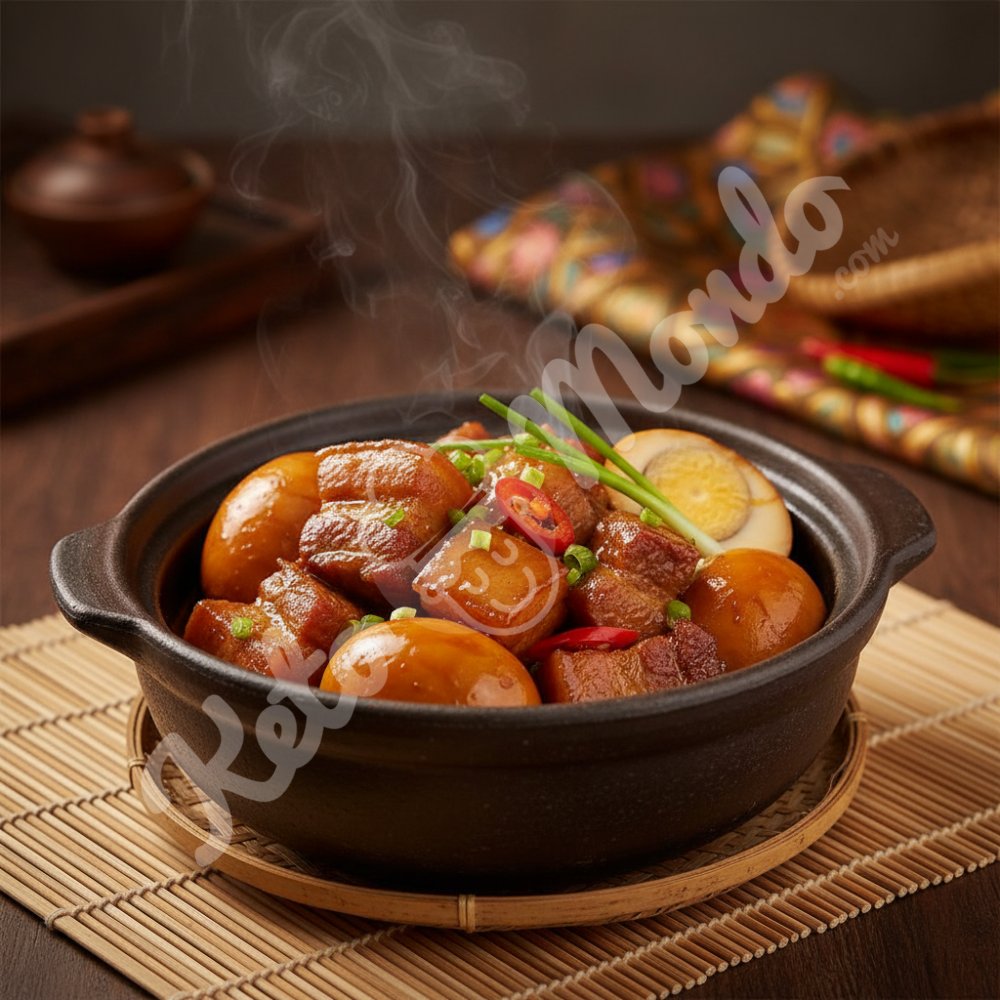
My childhood memories are filled with meals where rice was a distant option. We focused on a clear broth, a mountain of fresh herbs, grilled fish or meat simmered in its own juices. The rice was there to 'fill' if necessary, but the pleasure, flavor and vitality lay elsewhere. By rediscovering this meal structure, I'm not just adopting a 'low-carb' diet; I reconnect with an ancestral food hierarchy where the raw product takes precedence over the starchy filling.
Wild Abundance and Survival
Before intensive rice cultivation became the norm and rice became a ubiquitous and cheap commodity, Vietnamese populations lived in symbiosis with wild and generous nature. We ate what the land provided: bamboo shoots, banana flowers, marsh grasses, freshwater snails, small rice field crabs. This diet was naturally low in complex carbohydrates and incredibly rich in micronutrients. It was a cuisine of immediate gathering and fishing, where the notion of 'cereal' was secondary to the availability of living things.
Returning to this practice, I am not a nutrition revolutionary. I'm just being honest with the history of my people. Our ancestors did not need large quantities of rice to be strong and endurance. They drew their energy from the biological diversity of their environment. This 'wild abundance' is the true basis of our gastronomy. Returning to a grain-free diet means honoring this resilience and this ability to transform the smallest blade of grass into a culinary treasure.
The art of balancing without a crutch
Grain-free Vietnamese cuisine is extremely sophisticated. Without the rice to soften flavors or mop up sauces, each element of the dish must be perfectly balanced. This is where the art of aromatics takes on its full meaning. Thai basil, long coriander, peppermint, lemon balm... these herbs are not decorations, they are the pillars of the taste structure. They bring freshness, bitterness, spiciness and depth which advantageously replace the bland neutrality of starch.
The use of 'Nước Mắm' (fermented fish sauce) also plays a crucial role. It’s the flavor anchor, the liquid umami that gives density to the dish without weighing it down. In my cooking, I play on these contrasts: the crunch of a raw vegetable, the melting of a well-chosen animal fat, the acidity of a lime and the power of fermentation. It’s precision cooking that requires careful listening to the ingredients. It's a delicate dance where each flavor has its place, creating a harmony that is sufficient in itself.
Beyond monoculture
There is a political and cultural dimension in the choice to eat grain-free in Vietnam. For decades, rice has been promoted as the symbol of modernity and food security, often at the expense of the diversity of local cultures. This monoculture ended up colonizing our palates, making us forget the richness of ancient tubers, wild seeds and especially the non-starchy vegetable part of our heritage. Rediscovering cooking without rice means beginning a process of decolonization of taste.
It’s about reclaiming a culinary identity that doesn’t depend on a single source of calories. It celebrates the plurality of Vietnamese lands, from the mountains of the North to the deltas of the South, where each region has its own grain-free subsistence strategies. By freeing my plate from rice, I also free my mind from the patterns imposed by the food industry. I find a freedom of choice and a curiosity for forgotten ingredients which are nevertheless the very essence of our culture.
The invisible thread of the ancestors
When I prepare a grain-free meal, I feel a deep connection with the women of my lineage. I remember my grandmother's actions, her way of chopping herbs, watching over the broth, choosing fish at the market. She didn't need to weigh her ingredients or count her macros. She cooked with 'feeling', guided by wisdom passed down from generation to generation. This wisdom said that the body knows what it needs, and that nature always offers the solution.
This connection has immense spiritual value. She reminds me that I am not alone in my quest for health and balance. I carry within me the legacy of thousands of years of adaptation and survival. By eating like my ancestors, I nourish not only my body, but also my soul. I keep alive an invisible thread that connects me to my land and my history. It is an act of gratitude to those who came before us and who left us this treasure trove of culinary knowledge.
A celebration of diversity and resilience
Ultimately, grain-free Vietnamese cuisine is not a 'depleted' version of our gastronomy. On the contrary, it is its purest, most resilient and most vibrant form. It is a celebration of biological diversity and human ingenuity. By removing the rice, we are not creating a vacuum; we leave space for the true essence of the ingredients to express itself.
I invite you to explore this little-known facet of our culture. Don't see the absence of rice as a deprivation, but as an opportunity to discover more intense flavors, more varied textures and more stable energy. Tradition already contains all the answers to our modern health and well-being needs. You just need to know how to look back to move forward with confidence. Vietnamese cuisine is a never-ending journey, and the grain-free path is one of the most beautiful and nourishing I've ever taken.