
The Standard of Immediacy
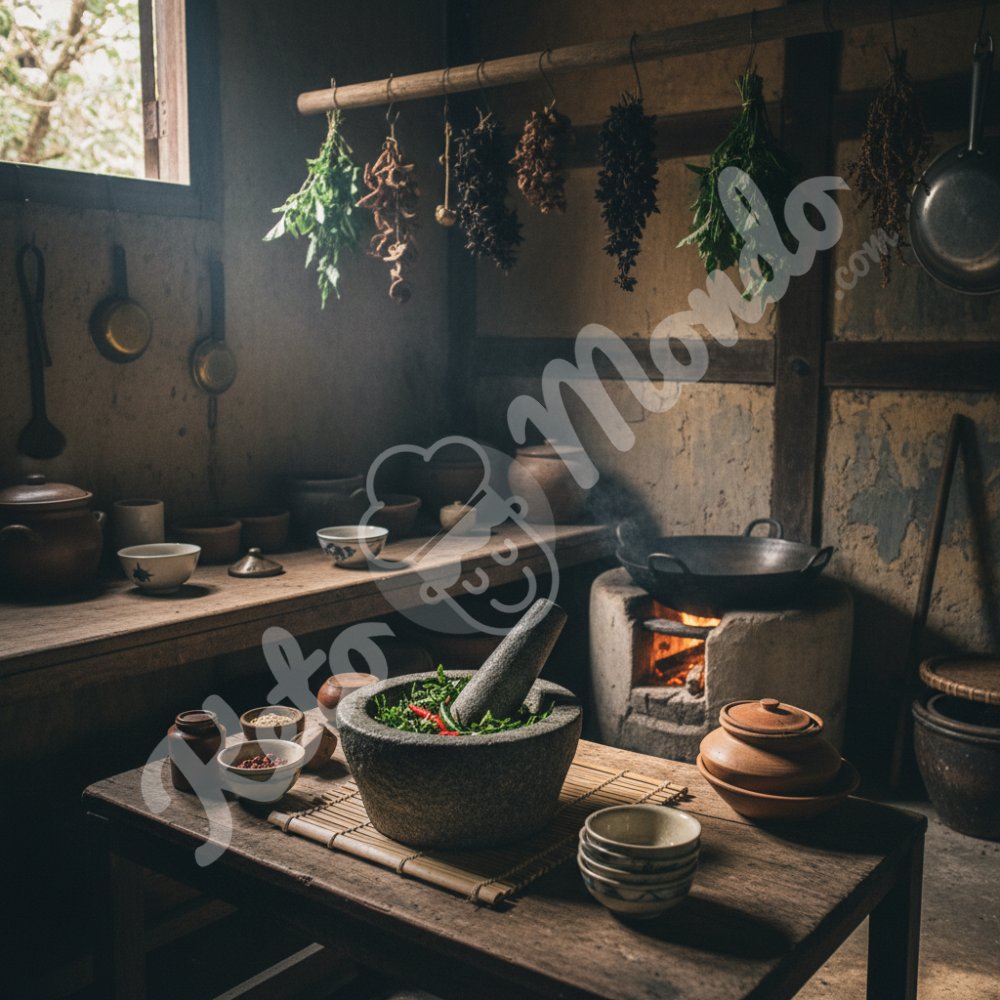
In our modern world, we have come to consider 'freshness' as a marketing attribute, a label slapped on products that have often traveled thousands of miles. But for my ancestors in Vietnam, freshness was not a concept, it was an inescapable physical reality. Before the invention of freezers, before the widespread use of industrial canning, there was only immediacy. What was picked in the morning was eaten at noon. What was caught at dawn was cooked at dusk. There was no 'dead time' between the earth and the plate. This standard of immediacy guaranteed a nutritional vitality that we struggle to find today.
By returning to this requirement of absolute freshness, I am not seeking to be eccentric or nostalgic. I am simply seeking to place myself back into the natural flow of life. A food that has just been harvested carries within it an energy charge, an enzymatic structure, and a hydration that time inevitably degrades. Eating fresh is eating the 'now'. It is refusing to feed on memories of food, to embrace the vibrant reality of the raw product. It is a radical health practice that simplifies everything: no more need for preservatives, no more need for additives to mask the blandness of storage. Freshness is enough in itself.
Preservation Through Life
One might think that without refrigeration, our ancestors were helpless. This is to ignore the incredible ingenuity of traditional preservation techniques. But beware, these techniques were not intended to 'freeze' the food in a state of clinical death, as freezing does. They aimed to transform the food through life. Fermentation, for example, is an ancestral technique that uses beneficial bacteria to protect and enrich food. A fermented vegetable is not 'old', it is 'evolved'. It has become more digestible, richer in probiotics, more complex in flavors.
Salt, sun-drying, smoking... all these methods were used sparingly and intelligently. But the true 'refrigerator' of traditional Vietnamese society was the daily market. It was the institution that allowed everyone to access freshness without the need to store. By retaining this practice, I connect to an uninterrupted continuity of gestures and knowledge. I refuse accumulation in favor of flow. My kitchen is not a warehouse, it is a place of passage where life is transformed into energy.
Sensory Education
Cooking fresh every day develops an intimate and sensory knowledge of food that supermarkets have almost erased. We learn to 'read' an ingredient. We know, by touch, if a fish is firm and healthy. We recognize, by smell, the exact maturity of an herb or a fruit. We see, by color, if a vegetable has been soaked in sun or if it grew too fast. This sensory literacy is a precious heritage. It makes us autonomous and critical of the quality of what we ingest.
This knowledge is not learned in books, it is transmitted through observation and repetition. This is what I received from my mother, and what she received from hers. It is a silent expertise that settles in effortlessly. By cooking daily, we become experts in our own nutrition. We instinctively know what will do us good today, depending on the weather, our state of fatigue, or our emotional needs. Freshness is the language through which nature speaks to us, and cooking is our way of answering.
Anti-accumulation and the Flow of Qi
There is a spiritual dimension in the refusal of food accumulation. In Eastern thought, energy — Qi — must flow freely. A cupboard overflowing with canned goods or a freezer full of forgotten leftovers are zones of energetic stagnation. They create mental and physical heaviness. By respecting the daily cycle — buy, cook, eat, repeat — we stay in the movement of life. There is no loss, because there is no excess.
This respect for the cycle creates a deep harmony with the outside world. We feel synchronized with the seasons, with the market arrivals, with the rhythm of the sun. This joyful sobriety is incredibly liberating. We stop being slaves to our stocks and expiration dates. We live in the abundance of the present, rather than in the anxiety of the future. It is a form of minimalism applied to nutrition, where the quality of the moment takes precedence over the quantity accumulated.
The Gesture as a Living Heritage
The greatest gift I can give my children is not a collection of recipes, but a living relationship with food. By seeing me transform raw and fresh ingredients every day, they learn that eating is an act of creation and respect. They see that food is not a finished product that comes out of a plastic package, but a gift from the earth that requires attention and gratitude. It is an education in life itself.
This transmission happens through the gesture, through the smell of the kitchen that changes every day, through the shared pleasure around a dish that has just been prepared. It is a continuity that goes beyond words. By maintaining this practice of ancestral freshness, I ensure that future generations will have the tools to feed themselves in harmony with their environment. It is a form of cultural resistance against industrial standardization. It is keeping alive a flame that has been burning for millennia.
Freshness as a Spiritual Practice
Ultimately, prioritizing freshness is much more than a dietary choice. It is a spiritual practice, a way of saying 'yes' to life in its most immediate and purest form. It is honoring our ancestors by perpetuating their wisdom, while taking care of our own bodies with the highest standards.
I invite you to rediscover this ancestrality. Do not see the daily market as a constraint, but as an opportunity to reconnect with the world. Let yourself be guided by your senses, trust the season, and savor the difference a truly fresh ingredient can make in your life. Freshness is the bridge between the past and the future, between the earth and the spirit. Cross it every day, and you will discover a vitality you never thought possible. The old is fresh, and the fresh is eternal.